Roofing guide
How to File a Roof Storm Claim in Georgia
A storm claim is mostly paperwork and timing. Get both right and the roof conversation gets much easier.
Talk to a roofer
A person answers any hour and can put a crew on the schedule while you are on the line.
Answered 24/7(470) 291-8924By Karl Sutton, Residential Roofing Writer · Updated September 2026
A roof storm claim in Georgia goes smoothest when you protect the house first, document damage with dated photos, get an on-roof inspection, then report the claim to your carrier before its deadline. Many policies use a 12-month window from the storm, and some allow 24, so check yours and file while the damage is fresh.
Protect the house
Step One: Stop Further Damage
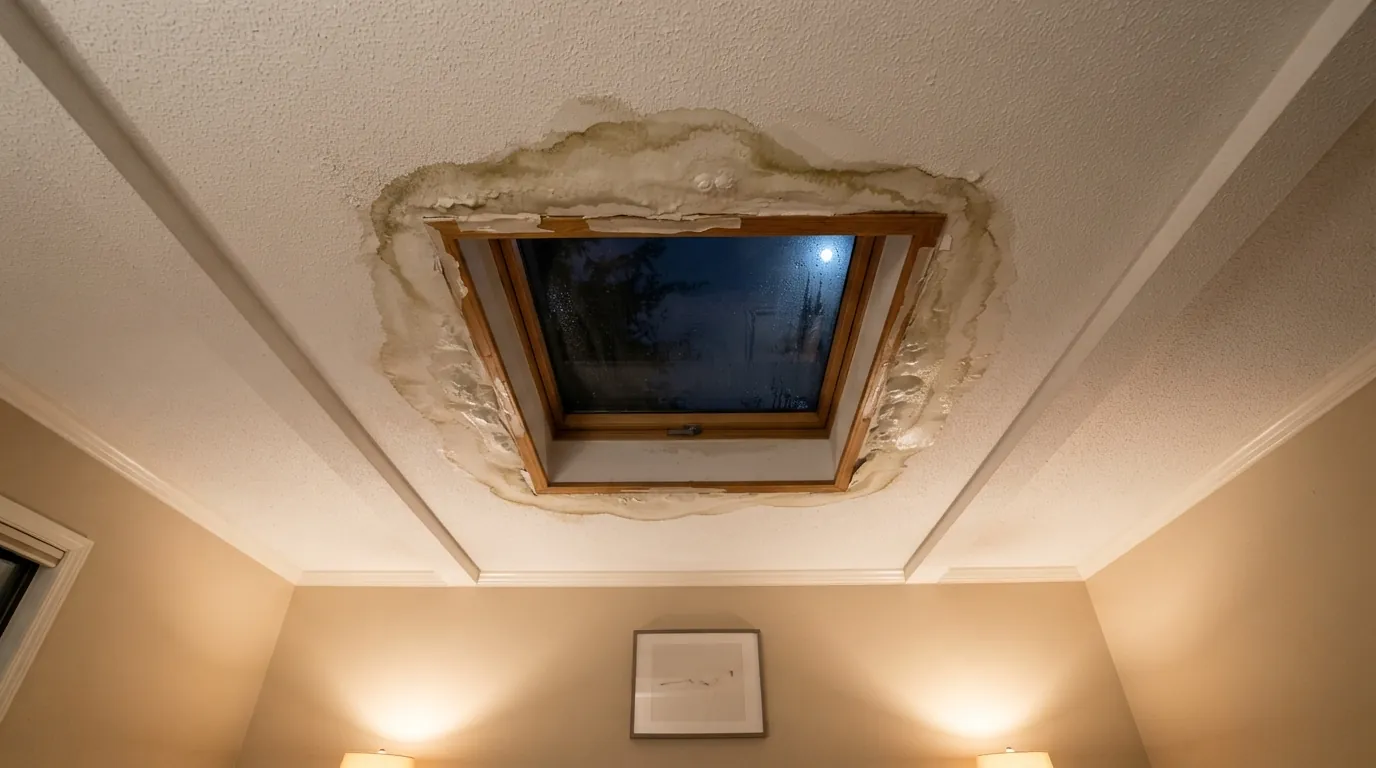
Most policies expect you to prevent further damage once you know about it. If the roof is open, get a tarp on; if water is inside, move belongings, catch it and dry what you can.
Keep every receipt: the tarp visit, fans, towels. Reasonable costs to protect the house are commonly part of the claim, and receipts make that easy.
Records
Step Two: Document Everything
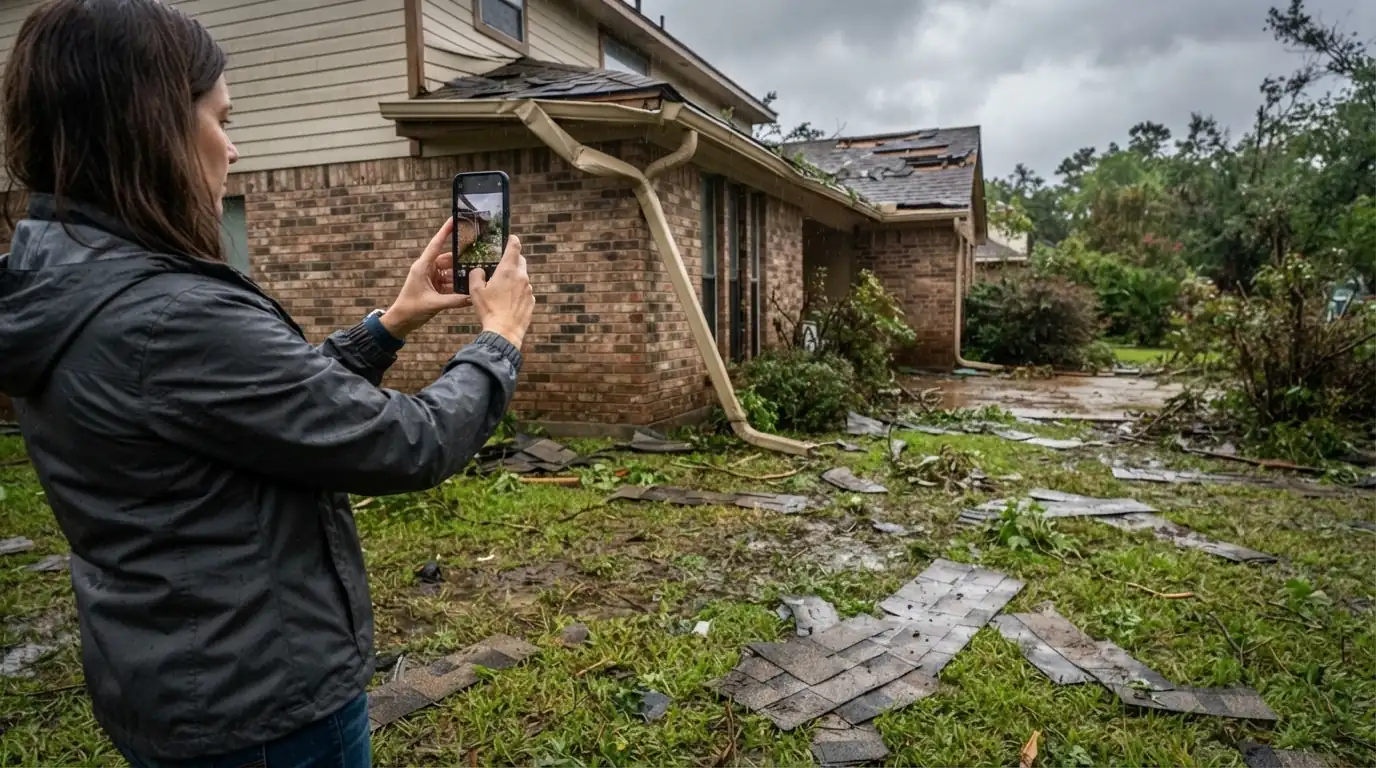
Photograph the outside from every side, any shingles or debris in the yard, dented gutters and vents, and every stain inside, with dates. Write down when the storm hit and what you saw and heard.
Keep damaged items until the carrier has seen them or tells you otherwise. The goal is a record that shows the damage came from this storm, on this date.
The evidence
Step Three: Get an On-Roof Inspection
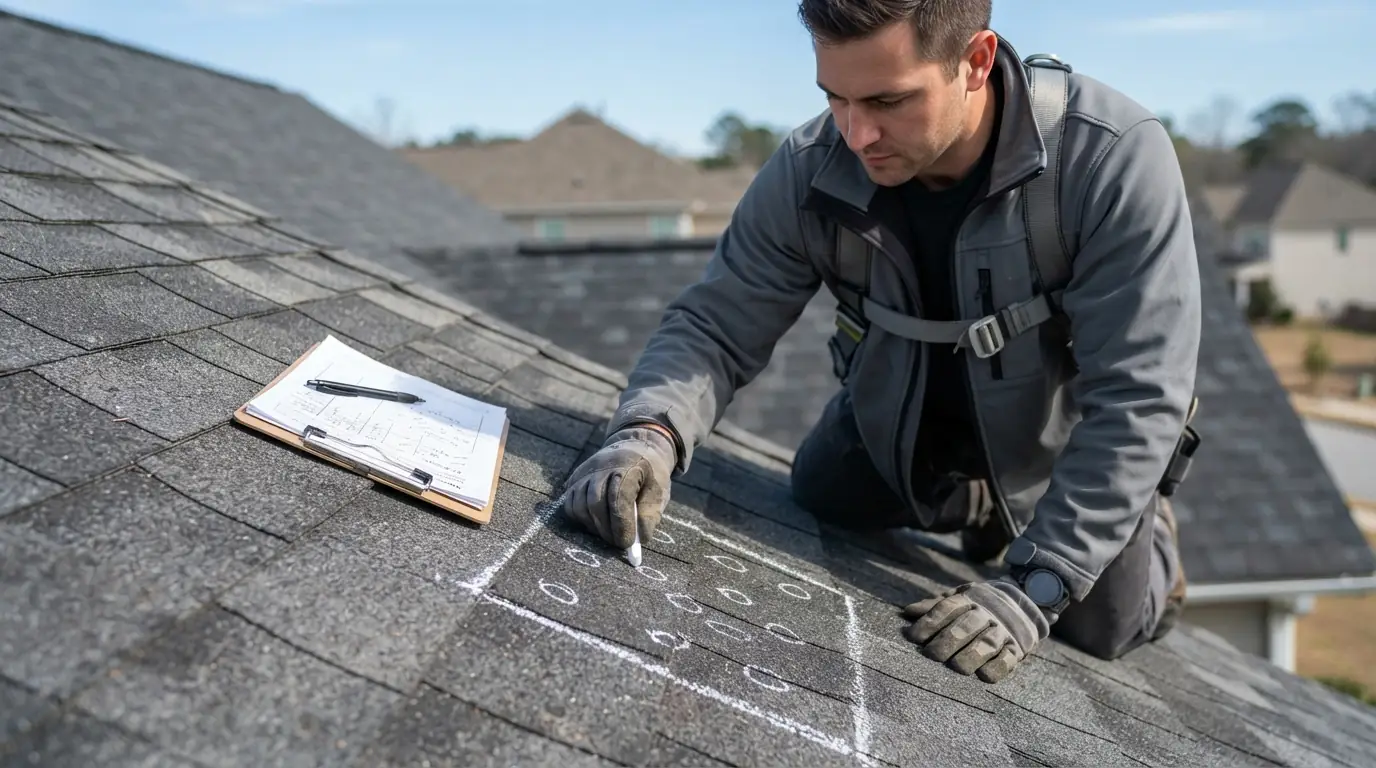
Hail and wind damage rarely shows from the ground, so have a roofer inspect before you file. A proper inspection marks test squares on each slope, photographs hits, checks soft metals and looks in the attic.
The result tells you whether there is damage worth a claim at all. If there is not, you have saved yourself a claim on your record; if there is, you have the evidence ready.
Storm came through? Call and book an on-roof inspection before you file.
Call nowDeadlines
Step Four: Report the Claim on Time
Call your carrier or use its app, give the storm date and a summary, and write down the claim number. Many policies set a 12-month window from the storm for reporting, and some allow 24, but read yours rather than assuming.
Ask what your deductible is and how the policy pays for roofs. Some policies pay in two parts: an initial payment, then the remainder once the work is completed and documented.
On the roof
Step Five: The Adjuster Visit
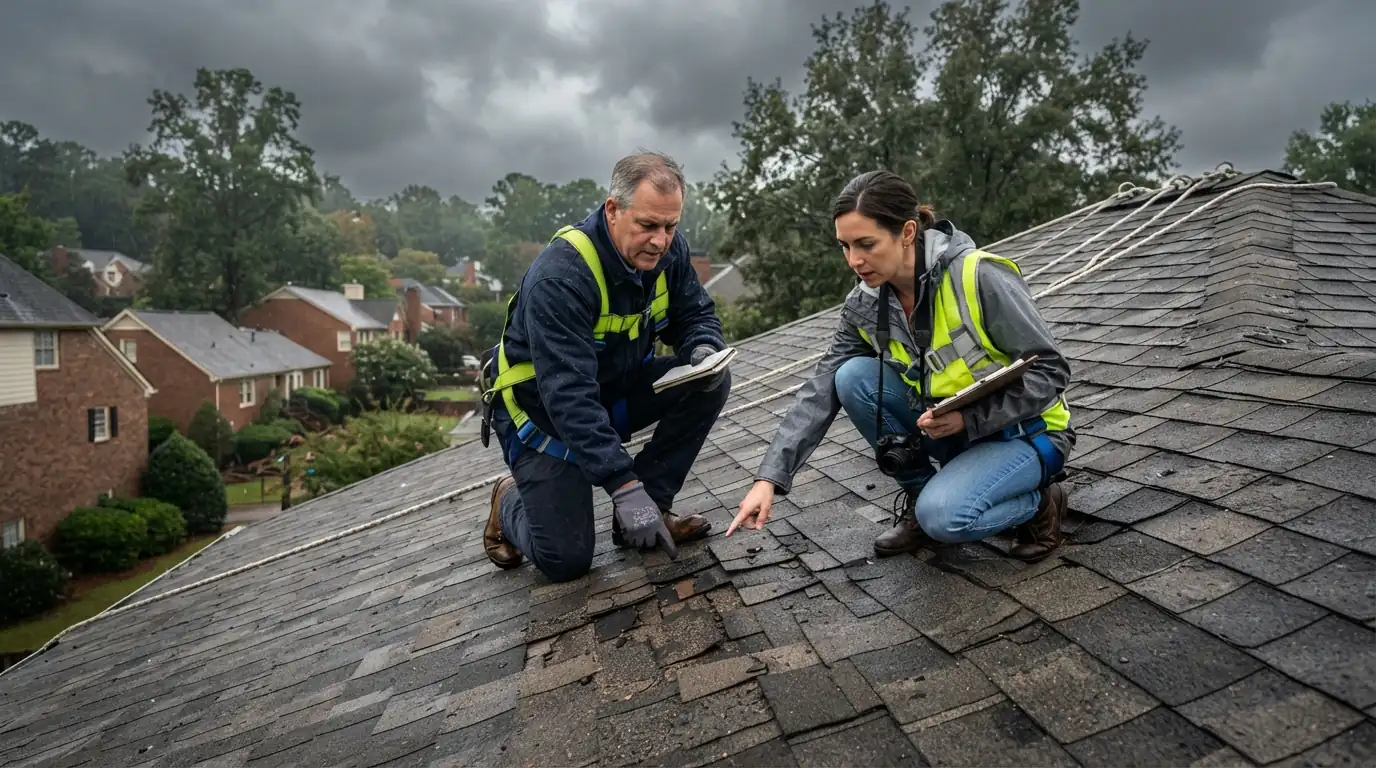
The carrier sends an adjuster to inspect. Having your roofer there helps: they can walk the slopes together and point to specific hits, dented metals and lifted tabs with their own photos in hand.
If the adjuster misses damage you can see in your photos, say so politely and ask how to request a reinspection. Most disagreements come down to documentation, not intent.
The work
Step Six: Approval, Extra Items and the Repair
Once the scope is approved, the repair or replacement is scheduled. Damage found during the work that nobody could see before, most often rotten decking under the old shingles, is photographed and submitted to the carrier as an addition to the claim.
Keep the final invoice, completion photos and any paperwork the carrier asks for. Those close out the claim and release any remaining payment.
Avoid these
Mistakes That Make Claims Harder
Waiting months after the storm. Throwing out damaged materials. Letting a door-knocker file for you, or signing a form that hands your insurance benefits to a contractor before you have read it.
Be wary of anyone offering to cover your deductible; that is your share under the policy. Our storm damage team documents damage and meets adjusters, but the claim and every decision in it stay yours.
FAQ
Questions We Hear About This
It depends on your policy. Many use 12 months from the storm and some allow 24; check your own policy.
Protect the house and get an inspection first, then file with the evidence ready.
That depends on your carrier and policy. Ask them directly.
Then a claim does not pay anything. An inspection tells you before you file.
It is not required, but it helps. They can point to damage and share their photos.
Ask for the reason in writing and whether a reinspection is possible. Good documentation is your strongest argument.
Yes. The carrier pays for the covered scope; you choose who does the work.
Atlanta, GA service office
1421 Peachtree St NE FL. 3, Atlanta, GA 30361
Talk to a roofer today
Start the claim with the full picture
Call after the storm. We tarp what is open, inspect every slope and give you dated photos before you file.