Commercial leak calls answered 24/7
Commercial Roof Repair and Upkeep in Atlanta for Low-Slope Buildings
On a flat roof, the drip in the ceiling tile is rarely under the hole. Finding where the water actually gets in is most of the job.
At a glance
- 24/7
- Calls answered
- 4 systems
- TPO, EPDM, mod bit, metal
- Photo log
- Every visit
- Atlanta
- Service office
Commercial roofing in Atlanta is mostly low-slope work: TPO, EPDM, modified bitumen and metal roofs over shops, offices and warehouses, where one storm can put water on a sales floor. We find the entry point, repair the membrane or flashing that failed, and keep drains and scuppers clear so water leaves the roof.
Updated September 2026
Step by step
How We Handle a Commercial Roof Call
- 1
Call about the leak
Where it drips and when it started.
- 2
Inside first
We trace the water from the ceiling up.
- 3
Roof inspection
Seams, curbs, drains and edges checked.
- 4
Photos and scope
Findings and repair written up for approval.
- 5
Protect operations
Work timed around business hours where possible.
- 6
Repair in kind
Matched membrane and flashing repairs.
- 7
Report
Photo log and condition notes for your file.
Signs to watch for
Signs a Commercial Roof Needs Attention
Stained or sagging ceiling tiles
Water is sitting above the grid.
Water pooling days after rain
Drains or slope have failed.
Blisters or open seams
The membrane is separating.
Loose edge metal
Wind can peel the perimeter back.
Cracked sealant at curbs
Rooftop units are common leak points.
The job
Why Flat Roof Leaks Show Up Far From the Hole
On a flat roof, water does not leak where it enters. It travels under the membrane or through insulation and drips out at a seam in the deck, sometimes yards away.
We repair in kind: TPO welded, EPDM taped, modified bitumen torched or adhered, metal refastened and sealed. Carlisle, Firestone and GAF membranes are all common here, and matching the existing system is what lets a repair bond.
What the work covers
Commercial Roof Leak Repair
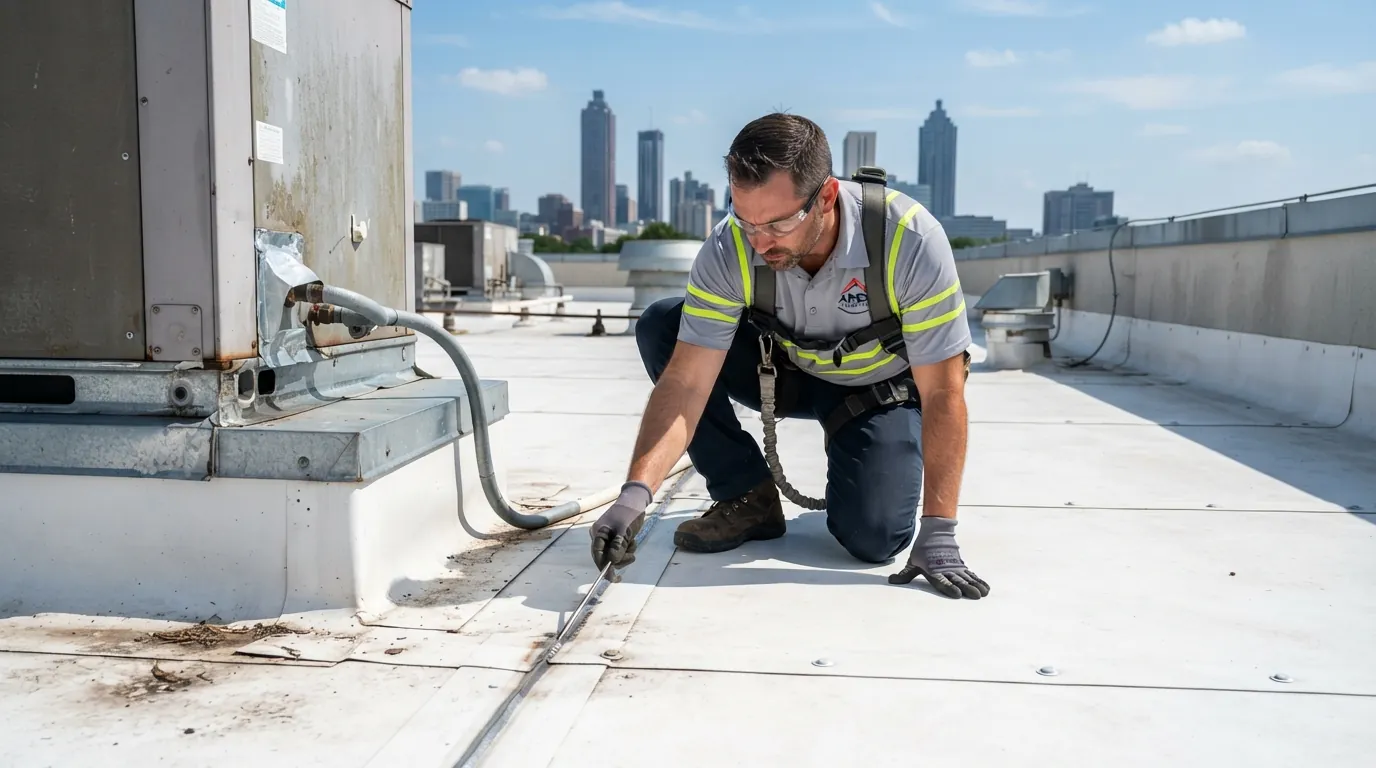
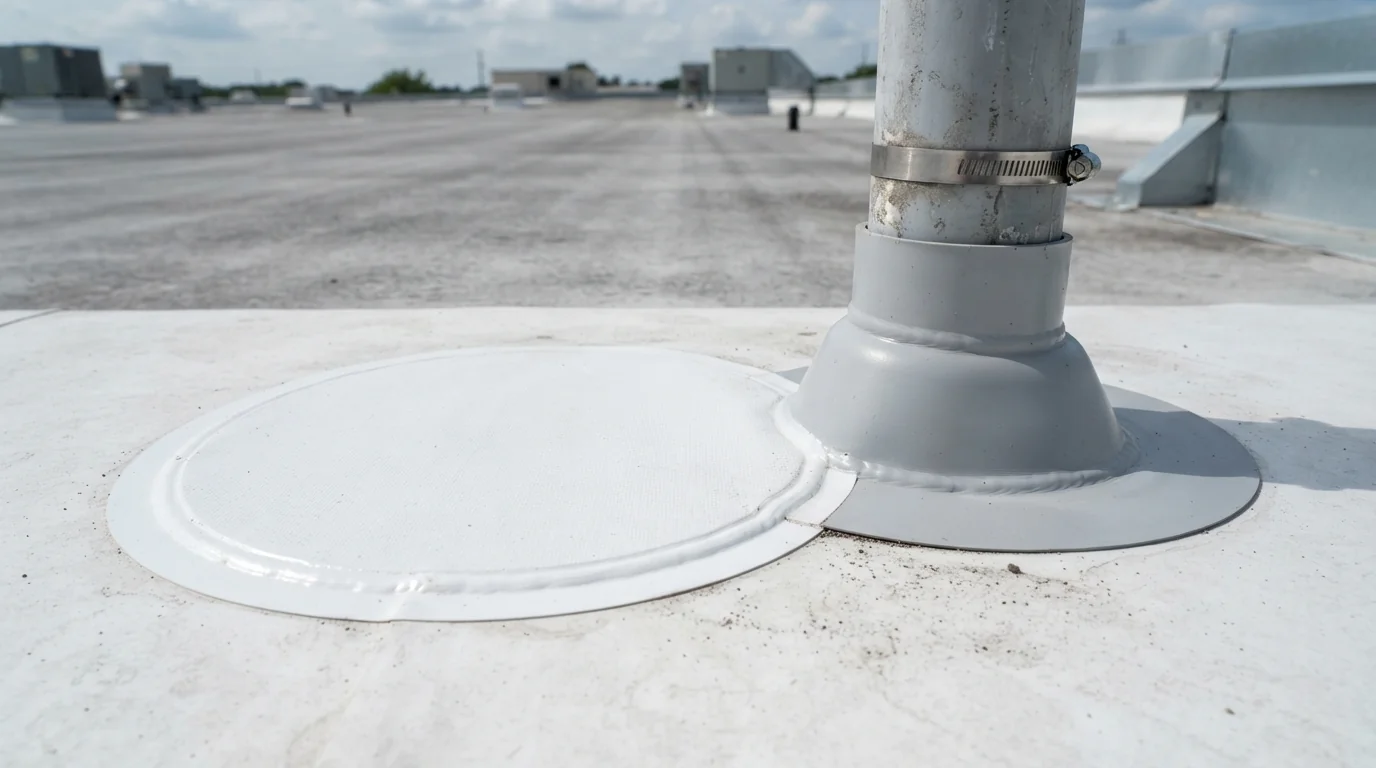
Commercial leaks cluster at the same places: open seams, rooftop unit curbs, pipe penetrations, parapet walls and the perimeter edge where wind lifts the membrane. We trace water from inside and on the roof, probe seams, and check flashings around every curb and penetration. The repair matches the membrane: a welded patch on TPO, a taped cover strip on EPDM, a new ply on modified bitumen. Wet insulation around the leak is cut out and replaced, because leaving it spreads the damage.
Ponding and Drain Repair
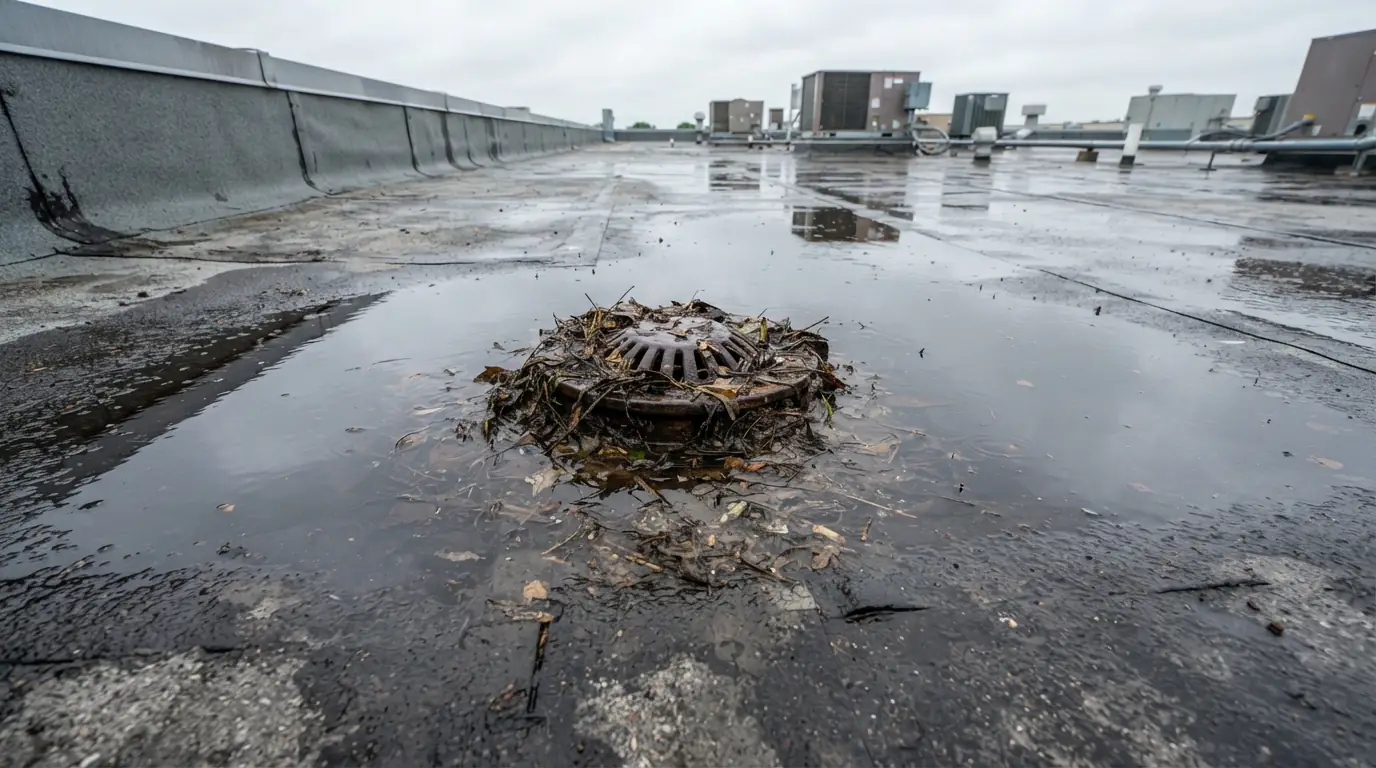
Water that stays on a roof for days after rain is ponding, and it shortens membrane life, adds weight to the structure and finds any weak seam under it. The cause is usually a clogged drain or scupper, a sagging deck, or insulation crushed by foot traffic. We clear and re-flash drains, add or enlarge scuppers, and correct low areas with tapered insulation or crickets. Where the whole roof has lost its slope, flat roof replacement is the lasting fix.
Commercial Roof Maintenance Plans
Most commercial leaks start with debris and neglect: clogged drains, cracked sealant at curbs, a loose edge nobody walked. Scheduled inspections, typically spring and fall plus after major storms, catch those early. Each visit clears drains, checks seams, curbs and edges, logs photos and flags anything that needs budgeting. Property managers get a written condition report they can plan around instead of emergency calls during business hours. Each report notes the roof's likely remaining life so replacement can be budgeted ahead.
Local conditions
Rain, Wind and Atlanta's Commercial Roofs
Above-average rainfall is what exposes a commercial roof's weak points in Atlanta: a clogged drain becomes a pond, and a seam that held all year opens under standing water. Late-season storms add wind. Forecasters covering north Georgia flag damaging gusts as the main hazard even in September patterns, and wind attacks a low-slope roof at its perimeter and corners first, which is why we secure edges before storm season.
What is included
What a Commercial Repair or Inspection Visit Covers
- Interior leak tracing and moisture check
- Seam probing across the membrane
- Flashing checked at every curb and penetration
- Drains, scuppers and gutters cleared
- Perimeter edge and coping secured
- Wet insulation cut out and replaced
- Repairs matched to the existing membrane
- Photo log of findings and repairs
- Written condition report for the building
What drives the price
What Commercial Roof Repair Costs Depend On
Commercial repair pricing follows the membrane, the access and how far the water has traveled.
Membrane type
TPO, EPDM, mod bit and metal repair differently.
Wet insulation
Saturated areas cut out and replaced.
Access
Roof hatch, ladder or lift, and business hours.
Rooftop equipment
Curbs and units that need re-flashing.
Drainage work
Drains, scuppers or crickets added.
Roof size
More roof means more seams to check.
Brands we install and service
Questions we hear
Commercial Roofing Questions
Usually. The work happens above, and noisy work is timed around your hours where we can.
TPO, EPDM, modified bitumen, metal and coated roofs on small commercial buildings.
Water travels under the membrane and through insulation before it drips, so the entry point is often far from the stain.
Yes. It shortens membrane life, adds weight and finds weak seams. Water still standing two days after rain should be looked at.
Yes. Spring and fall visits plus checks after major storms, with a written report each time.
If it is dry underneath, often. See our roof coating page.
Yes. Reports, photos and scopes are written to go straight to owners or budgets.
Atlanta, GA service office
1421 Peachtree St NE FL. 3, Atlanta, GA 30361
Talk to a roofer today
Keep water off the sales floor
Call any hour about a leak, or set up scheduled inspections. You get a photo log and a written report either way.