Answering 24/7, cleanings by appointment
Roof Cleaning in Atlanta That Removes Algae Without Stripping Shingles
Black streaks are algae, not dirt. Killing it takes a solution and patience, not a pressure washer.
At a glance
- 24/7
- Calls answered
- Soft wash
- Never pressure
- Plants protected
- Before and after
- Atlanta
- Service office
Roof cleaning in Atlanta should be a low-pressure soft wash, never a pressure washer, because high pressure strips the granules that protect asphalt shingles. We apply a solution that kills the algae causing black streaks, rinse gently, remove moss by hand, and clear pine needles from valleys and gutters.
Updated September 2026
The job
What the Black Streaks on Your Roof Actually Are
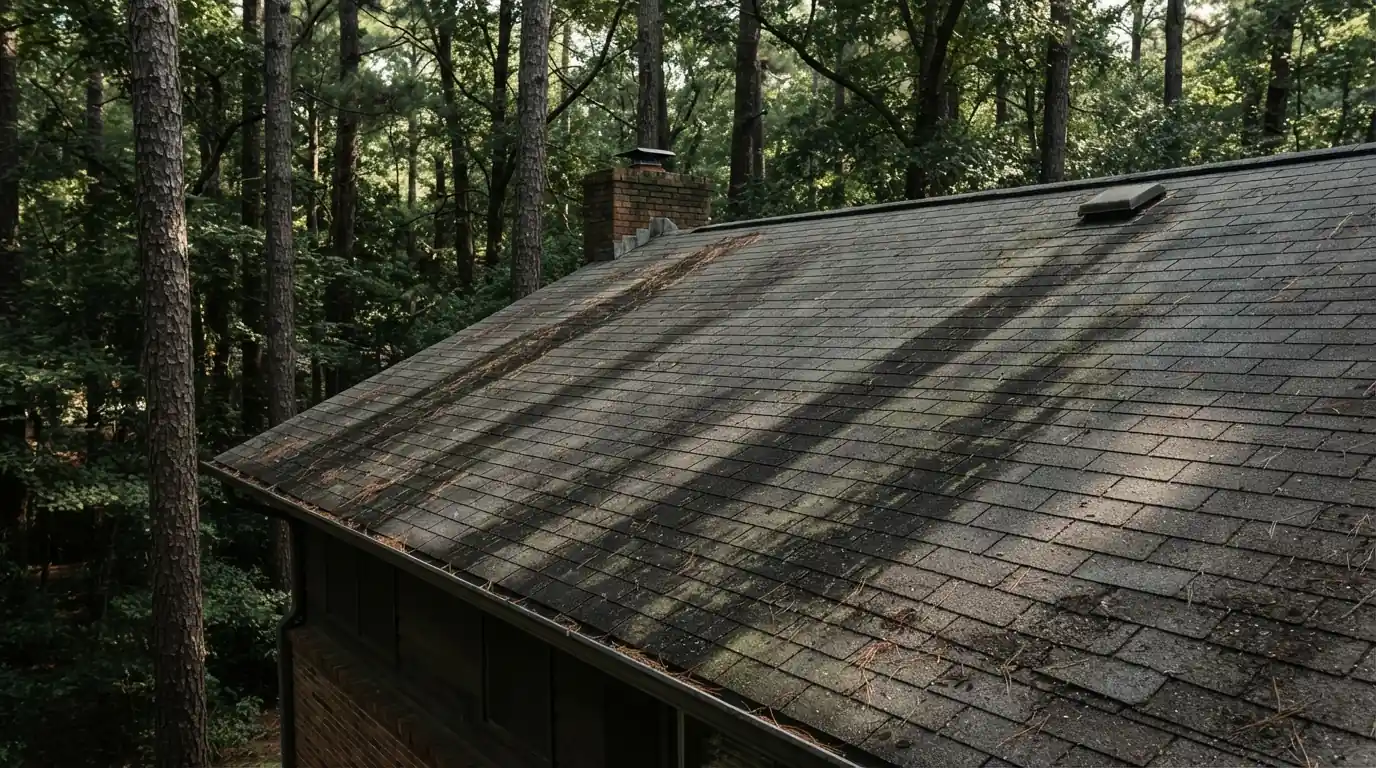
Those black streaks on shaded slopes are algae. It feeds on the limestone filler in many shingles, spreads downhill with rain, and holds moisture against the surface.
Cleaning is about killing it without harming the shingle: a soft wash at garden-hose pressure, plants wet down and protected, runoff managed. Moss and lichen come off by hand once the solution loosens them.
Local conditions
Shade, Canopy and Algae in Atlanta
Shade is what grows algae and moss on a roof, and Atlanta has plenty of it: about 61 percent of the city's single-family residential land sits under tree canopy. Streets near Nancy Creek and Utoy Creek, above 70 percent canopy, see it most. There, north-facing and tree-covered slopes stay damp long after rain, which is exactly where streaks and moss take hold first.
What the work covers
Algae Streak Soft Wash
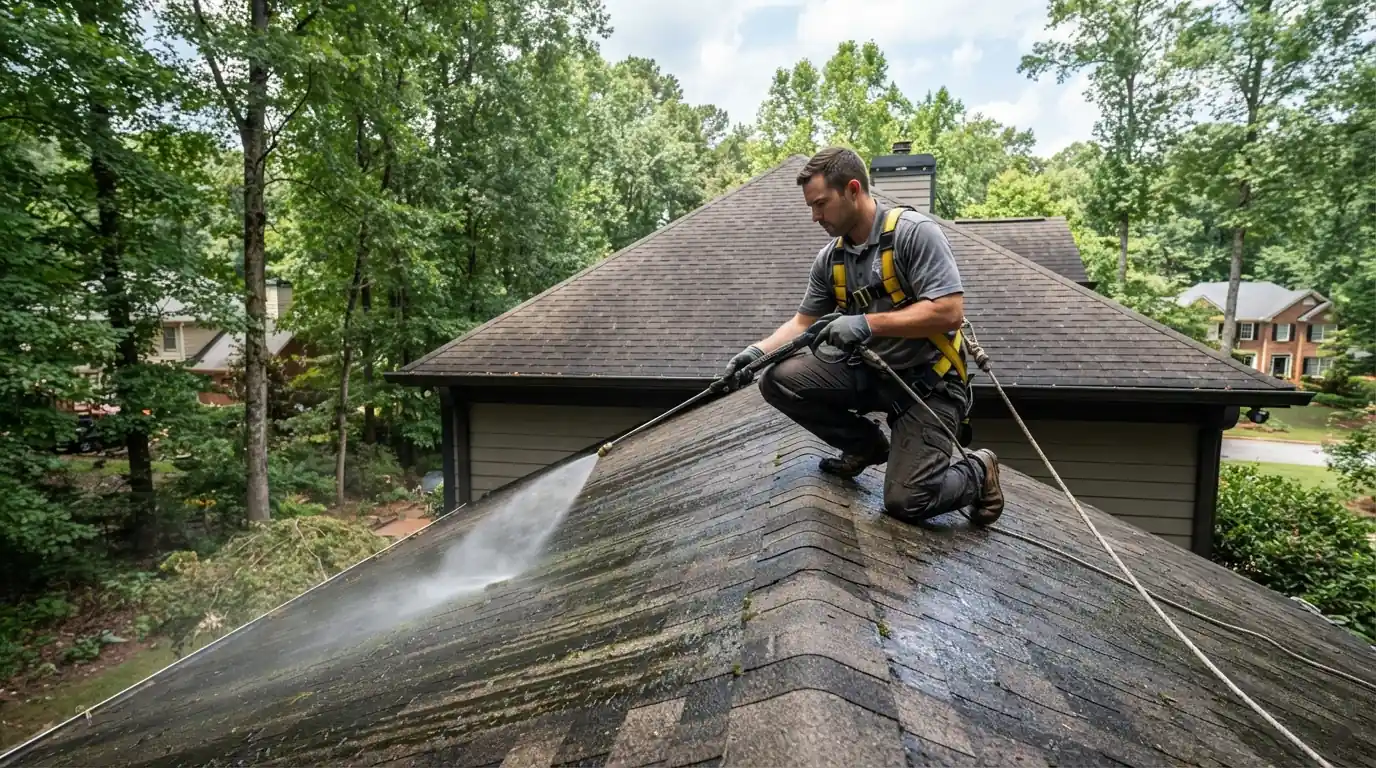
The streaks come from an airborne algae that thrives in warm, humid weather and shade. We apply a cleaning solution at low pressure, let it dwell long enough to kill the growth, then rinse gently. Some streaks keep fading for weeks afterward as rain washes the dead algae off. The plants below are wet down and rinsed before and after, and anything sensitive gets covered. For longer protection, zinc or copper strips along the ridge release metal with every rain that slows regrowth.
Moss and Lichen Removal
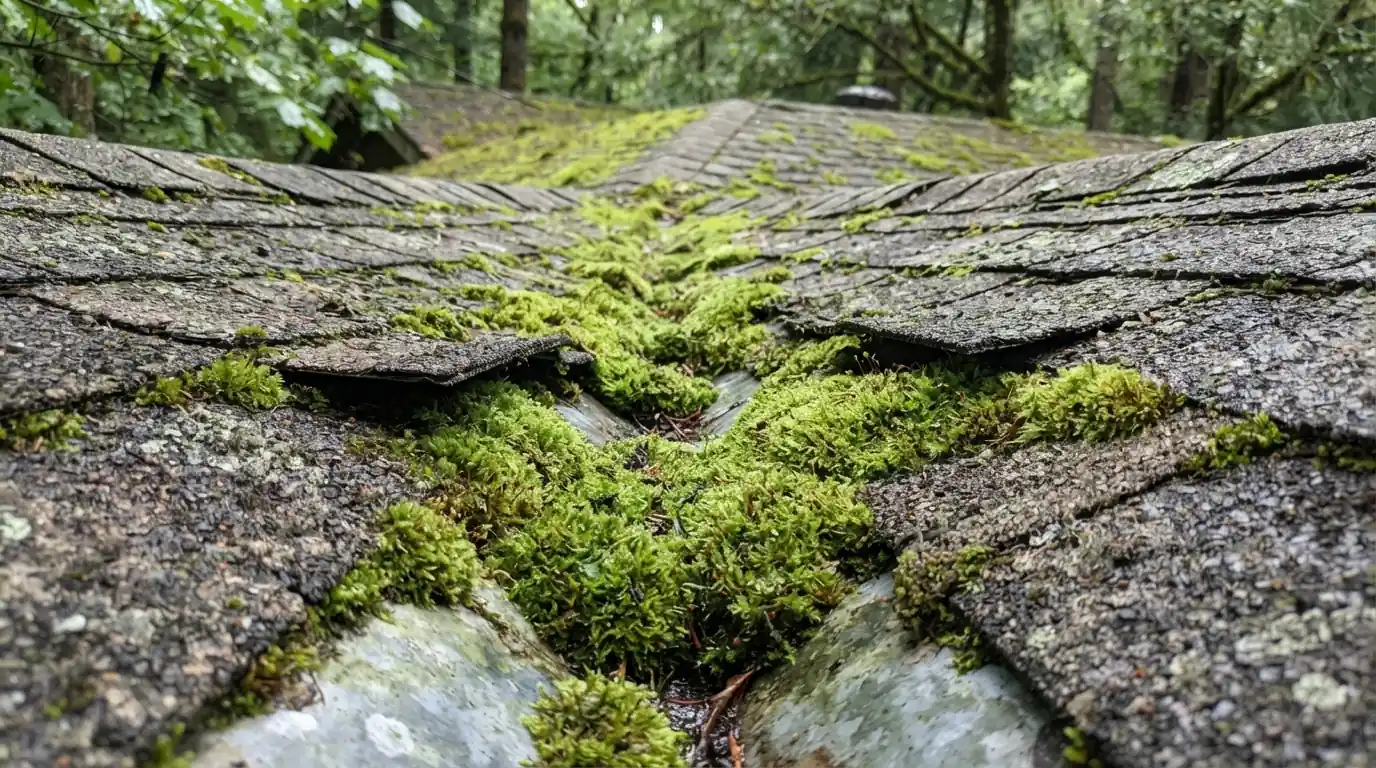
Moss grows as thick green cushions in shaded valleys and on north-facing slopes, lifting shingle edges and holding water under them. Lichen forms crusty gray-green patches that grip the granules. Neither should be scraped off dry, because that tears the shingle surface. We loosen both with a cleaning solution, remove moss by hand with soft tools, and let lichen die back and weather off rather than prying it loose. Shingles lifted by moss are checked and sealed back down before we leave.
Pine Needle and Debris Removal
Needles, sweetgum balls and leaves pile up in valleys, behind chimneys and against skylights, where they hold water and feed rot and algae. We clear these by hand and with a blower, flush the gutters and downspouts so the roof drains, and check the shingles under each pile, since that is where damage hides. Branches touching the roof are noted for trimming. On heavily treed lots, this part of the cleaning matters most for how long the roof actually lasts.
Step by step
How a Roof Cleaning Runs
- 1
Book a cleaning
Tell us about streaks, moss or debris.
- 2
Roof check
Shingle condition checked before cleaning.
- 3
Protect plants
Landscaping wet down and covered.
- 4
Clear debris
Valleys, chimneys and gutters cleared.
- 5
Soft wash
Solution applied at low pressure.
- 6
Rinse and remove moss
Gentle rinse, moss removed by hand.
- 7
Final rinse below
Plants rinsed again, gutters flushed.
What drives the price
What Roof Cleaning Costs Depends On
Cleaning is priced by roof size and how much growth and debris is on it.
Roof size
Square footage of roof to treat.
Pitch and height
Steep and two-story roofs take more setup.
Growth
Heavy moss takes more hand work.
Debris load
Valleys and gutters packed with needles.
Plant protection
Landscaping wet down and covered.
Ridge strips
Zinc or copper strips added on request.
DIY or call a roofer
Pressure Washing Versus a Soft Wash
Pressure washers are the most common way homeowners damage a roof.
| Doing it yourself | Having us do it | |
|---|---|---|
| Tool | Pressure washer | Low-pressure soft wash |
| Granules | Blasted off with the algae | Left in place |
| Moss | Scraped off dry | Loosened, then removed by hand |
| Plants below | Often burned by runoff | Wet down, rinsed and covered |
Signs to watch for
Signs Your Roof Needs Cleaning
Black streaks down the slope
Algae growth, worst on shaded sides.
Green cushions in valleys
Moss lifting shingle edges.
Gray-green crusty patches
Lichen gripping the granules.
Debris piles behind chimneys
Needles holding water against the roof.
Overflowing gutters
Roof debris washing down and clogging them.
Questions we hear
Roof Cleaning Questions
It will also strip the granules that protect shingles. Soft washing kills algae without that damage.
It depends on shade and moisture. Zinc or copper ridge strips slow regrowth.
We wet down, cover and rinse the plants below before and after to protect them.
Shade keeps that slope damp, which is where algae grows best.
Yes. It lifts shingle edges and holds water under them.
Yes. Gutters and downspouts are flushed during every roof cleaning.
It helps the house show well, and a pre-sale roof inspection pairs well with it.
Atlanta, GA service office
1421 Peachtree St NE FL. 3, Atlanta, GA 30361
Talk to a roofer today
Clean the roof without shortening its life
Call to book a soft wash. We will check the shingles first, protect the plants and leave the gutters flowing.