Answering 24/7
Attic Ventilation in Atlanta That Keeps Heat Off the Shingles
An attic that cannot breathe cooks the shingles from below in summer and soaks the deck with condensation in winter. Balanced vents fix both.
At a glance
- 24/7
- Calls answered
- Balanced
- Intake and exhaust
- Attic first
- Measured before we add
- Atlanta
- Service office
Attic ventilation on an Atlanta home works when intake at the soffits roughly balances exhaust at the ridge, sized by code at 1 square foot of vent per 150 square feet of attic floor, or per 300 when balanced. We measure both sides before adding vents, because more exhaust without intake pulls conditioned air out of the house.
Updated September 2026
The job
Why a Vent Mismatch Is Worse Than No New Vent
Most ventilation problems are not a missing vent but a mismatch: a ridge vent with soffits painted shut or buried under insulation, or a powered fan fighting a ridge vent and pulling air through the wrong opening.
We start in the attic with the insulation, baffles and existing vents, then change what is on the roof. Ridge vent lines from GAF, Owens Corning and CertainTeed's Air Vent all work well when there is intake to feed them.
Signs to watch for
Signs Your Attic Is Not Breathing
An attic you cannot stand in
Trapped summer heat bakes the shingles from underneath.
Frost or damp on nail tips
Winter condensation means moist air is stuck in the attic.
Curling shingles on a young roof
Heat from below ages shingles early.
Musty smell or dark sheathing
Moisture is sitting on the underside of the deck.
Upstairs rooms that stay hot
A hot attic radiates down through the ceiling.
Your options
Ridge Vents, Box Vents or a Powered Fan
Three common exhaust setups, and how each behaves with the intake a house actually has.
| Ridge vent with soffit intake | Box vents | Powered fan | |
|---|---|---|---|
| Airflow | Even along the whole peak | Spot exhaust at each vent | Forced by a motor |
| Intake needed | Yes, balanced | Yes | Yes, more than passive |
| Moving parts | None | None | Motor and thermostat |
| From the street | Hidden under ridge caps | Visible boxes | Visible housing |
What the work covers
Ridge Vent Installation
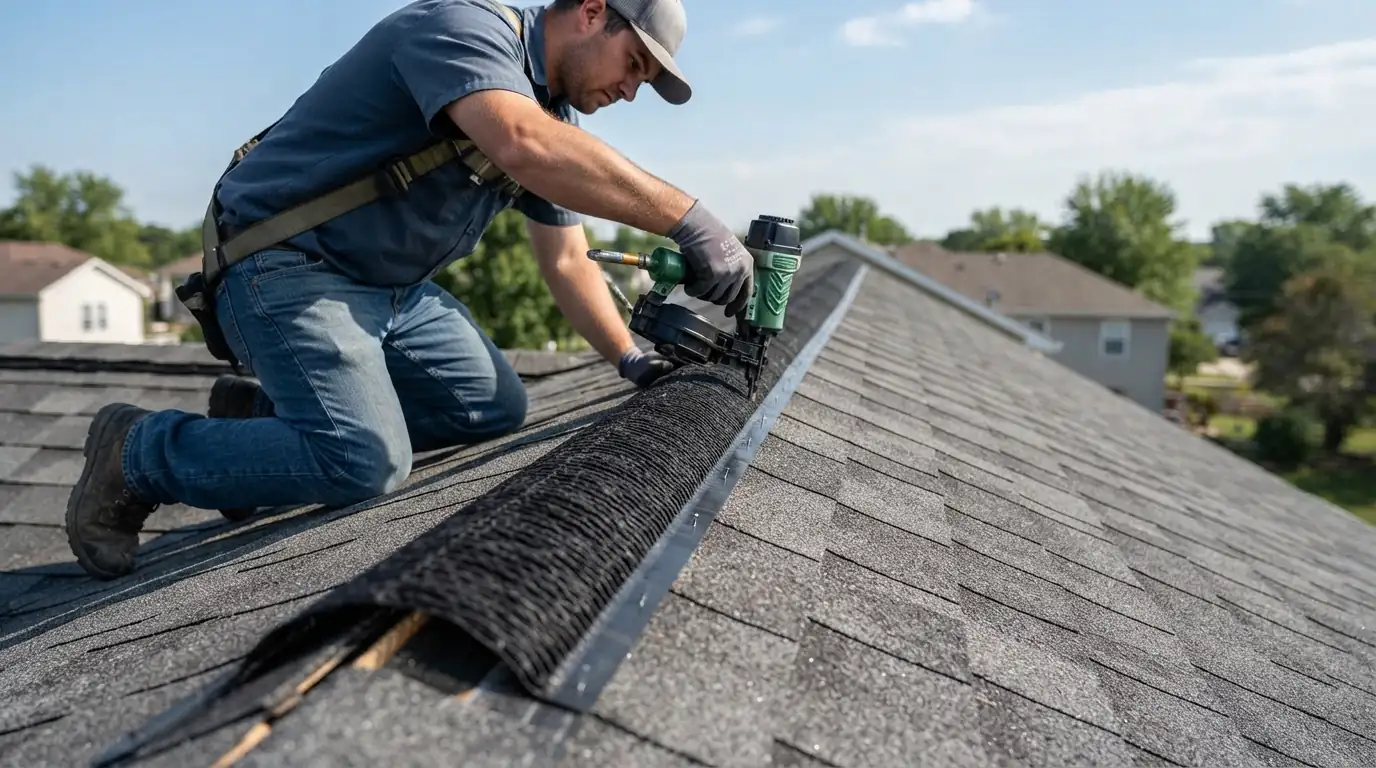
A ridge vent runs along the peak and lets hot air escape evenly across the whole attic. Installing one means cutting a slot in the decking on each side of the ridge, stopping short of the ends and any wall, then covering it with a baffled vent and matching cap shingles. The baffle matters: it keeps wind-driven rain out during sideways summer storms that push water through cheaper roll vents. When a ridge vent goes on, old box vents near the peak are removed and patched so the exhaust does not short-circuit.
Soffit Intake Vents
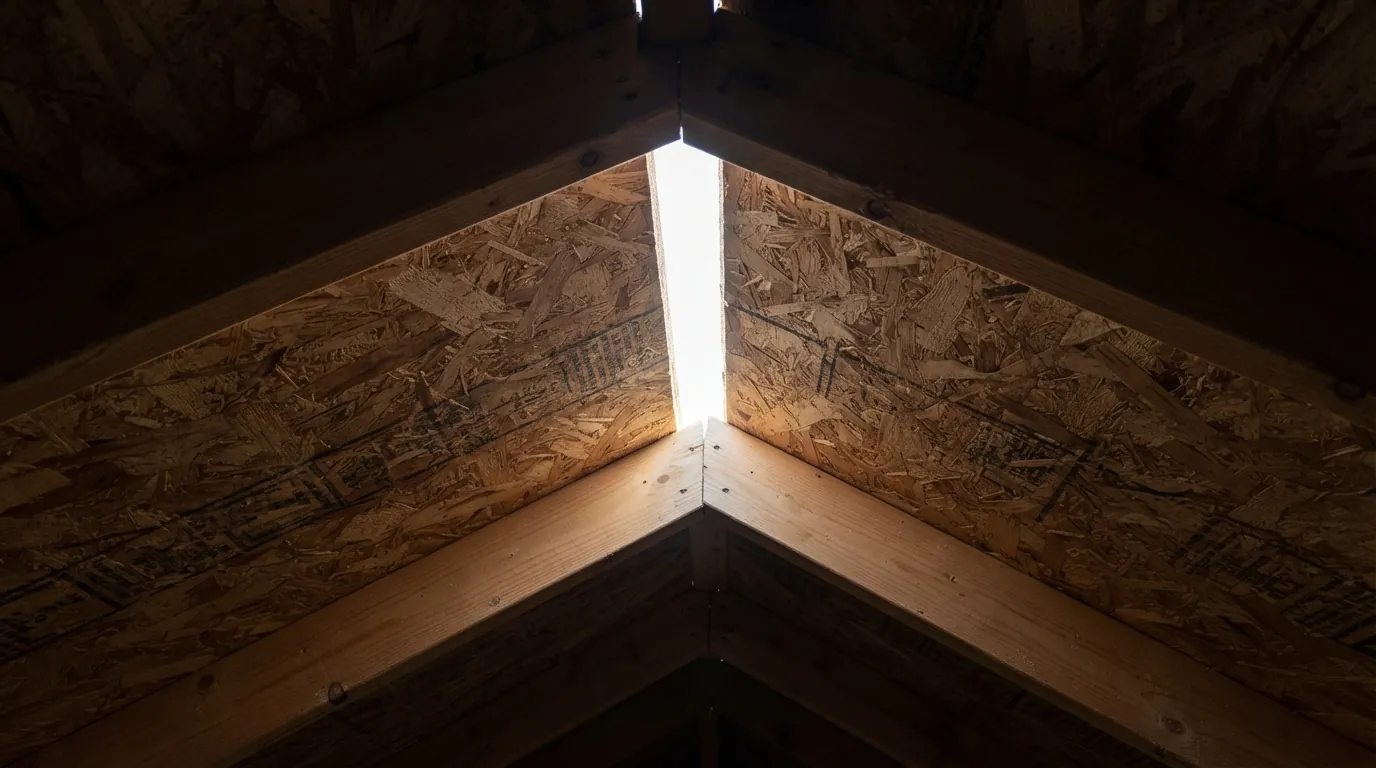
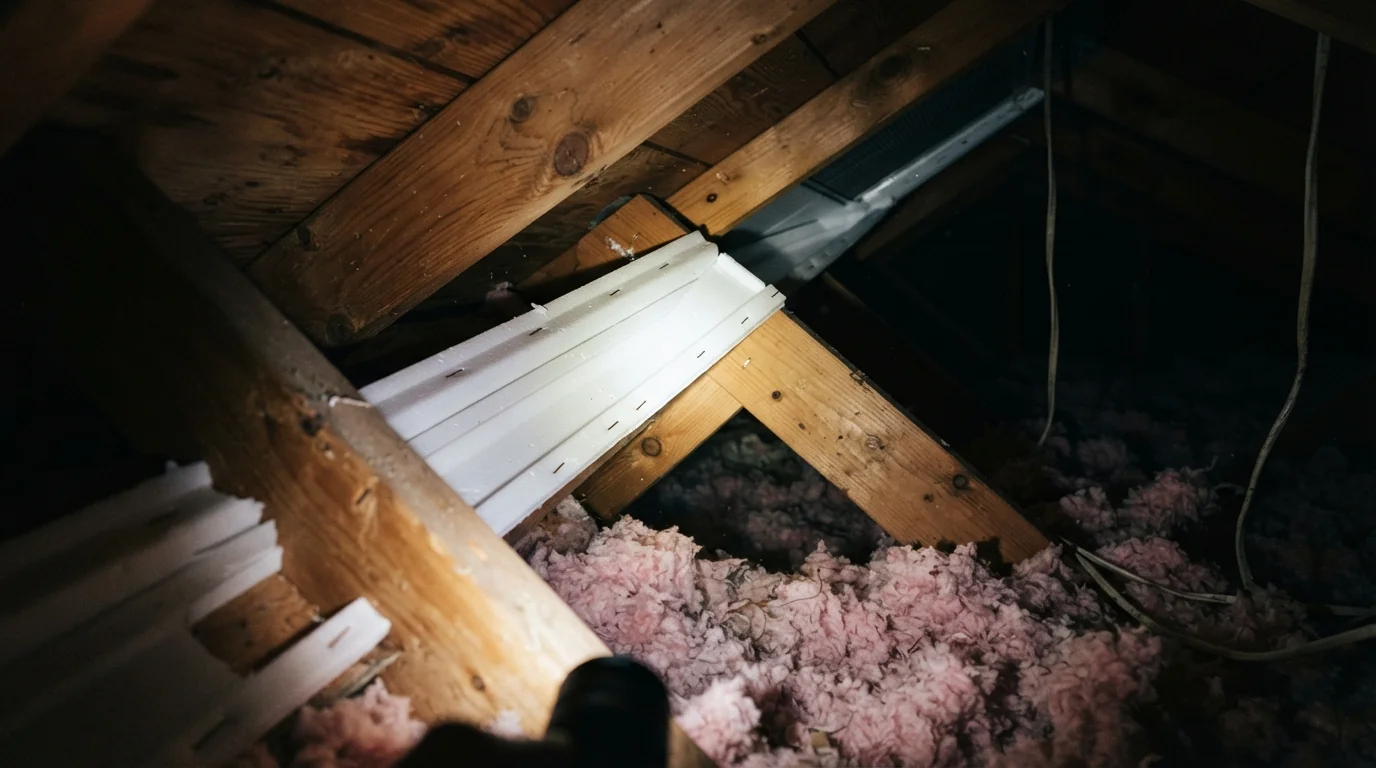
Exhaust only works if air can come in low. Many homes have soffit vents that were painted over, blocked by blown insulation or never cut through the soffit at all. We check each bay from the attic side, add baffles at the eaves so insulation stays clear of the airflow path, and add or replace soffit vents where the intake falls short. On homes with narrow soffits or none, an intake vent installed along the lower edge of the roof deck can supply the air instead.
Powered Attic Fan Replacement
Powered attic fans were popular for years, but a fan that pulls more air than the intake supplies draws it from the house instead, including cooled air through ceiling gaps. Once the motor quits, the fan is also a leak-prone hole in the roof. We usually replace a dead or noisy fan with passive ridge ventilation and remove the housing, patching the deck and shingles. Where a fan truly makes sense, it gets a thermostat and matching intake so it pulls from the soffits, not the living space.
What drives the price
What Ventilation Work Costs Depends On
Ventilation work is usually modest next to roofing, and the price follows what the attic actually needs.
Length of ridge
Feet of ridge vent and cap shingles.
Intake work
Soffit vents cut, replaced or added at the roof edge.
Baffles
Eave baffles set bay by bay from the attic.
Old vents removed
Box vents or fans taken out and patched.
Attic access
Tight or low attics take longer to work in.
Timing
Cheapest when done during a replacement.
Local conditions
Atlanta's 1970s and 1980s Attics
Atlanta's housing got younger over the last decade, with the city's median build year moving from 1973 to 1987, which still leaves a large share of homes from the 1970s and 1980s. Many of those attics rely on a few box vents and soffits that have since been painted or insulated shut, and through a long Atlanta summer that setup bakes the shingles from below. Balancing intake and exhaust is often the cheapest way to add years to those roofs.
Step by step
How We Fix Attic Ventilation
- 1
Call and describe it
Hot rooms, damp attic or aging shingles.
- 2
Attic inspection
Intake, exhaust, insulation and baffles checked.
- 3
Measure the balance
Vent area compared against the attic floor.
- 4
Written plan
What gets added, removed and why.
- 5
Open the intake
Soffits cleared or added, baffles set.
- 6
Install exhaust
Ridge slot cut and vented cap installed.
- 7
Remove the extras
Old box vents or fan patched over.
Brands we install and service
Questions we hear
Attic Ventilation Questions
Codes size it at 1 square foot of vent per 150 square feet of attic floor, or per 300 when intake and exhaust are balanced.
Usually not. Box vents near the ridge short-circuit it, so we remove and patch them.
Rarely. Without enough intake they pull cooled air from the house. Passive ridge and soffit venting is our default.
It lowers attic heat and eases the load on ducts running through the attic. The savings depend on insulation and duct sealing.
Warm, moist air from the house is condensing on cold nails. Ventilation plus air sealing at the ceiling fixes it.
Yes. A ridge vent can be cut into an existing roof and capped with matching shingles.
Screened vents keep out wasps and rodents. Damaged or unscreened vents are replaced as part of the job.
Atlanta, GA service office
1421 Peachtree St NE FL. 3, Atlanta, GA 30361
Talk to a roofer today
Let the attic breathe before next summer
Call to have the attic checked. We will measure intake and exhaust and tell you what, if anything, needs to change.