Roofing guide
How to Tell If Hail Damaged Your Atlanta Roof
Hail damage hides on the roof. The clues you can see from the ground are in the gutters, the vents and the downspouts.
Talk to a roofer
A person answers any hour and can put a crew on the schedule while you are on the line.
Answered 24/7(470) 291-8924By Karl Sutton, Residential Roofing Writer · Updated September 2026
Hail damage on an Atlanta roof usually shows first on soft metals and in the gutters: dented vents, dinged downspouts and fresh granules piling at the outlets. On the shingles, hail leaves round bruises where granules were knocked loose, which you rarely see from the ground, so an on-roof inspection within days is the reliable check.
The record
How Often Hail Hits Atlanta
More often than most people think. Over the last twelve months, forecasters logged 298 storm reports within 25 miles of Atlanta, with hail up to an inch and 39 severe-weather days, most between March and August.
A June 2025 storm dropped hail across Marietta, Sandy Springs, Buckhead, Decatur, Alpharetta, Smyrna, Dunwoody, Brookhaven and Kennesaw. In July 2026, warned quarter-size hail and 60 mph gusts crossed Cobb, Fulton, DeKalb and Gwinnett counties.
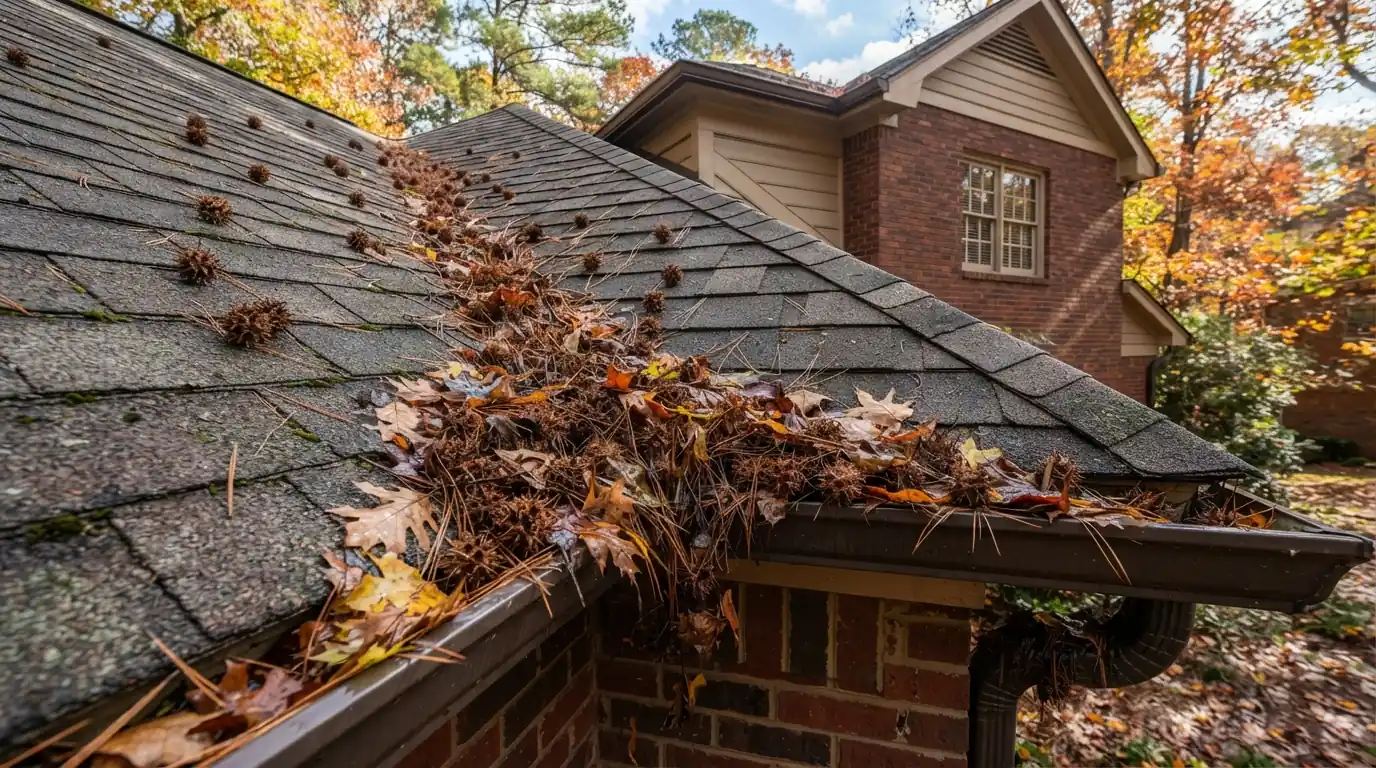
Walk the yard
What You Can Check From the Ground
Start with soft metal, because it records hail better than shingles do. Look for round dents in gutters, downspouts, box vents and the fins of the outdoor AC unit. Check window screens and painted trim for fresh chips.
Then check the downspout outlets. A small pile of dark sand-like granules after a storm means shingles lost part of their protective coating. None of this proves roof damage by itself, but it tells you an inspection is worth booking.
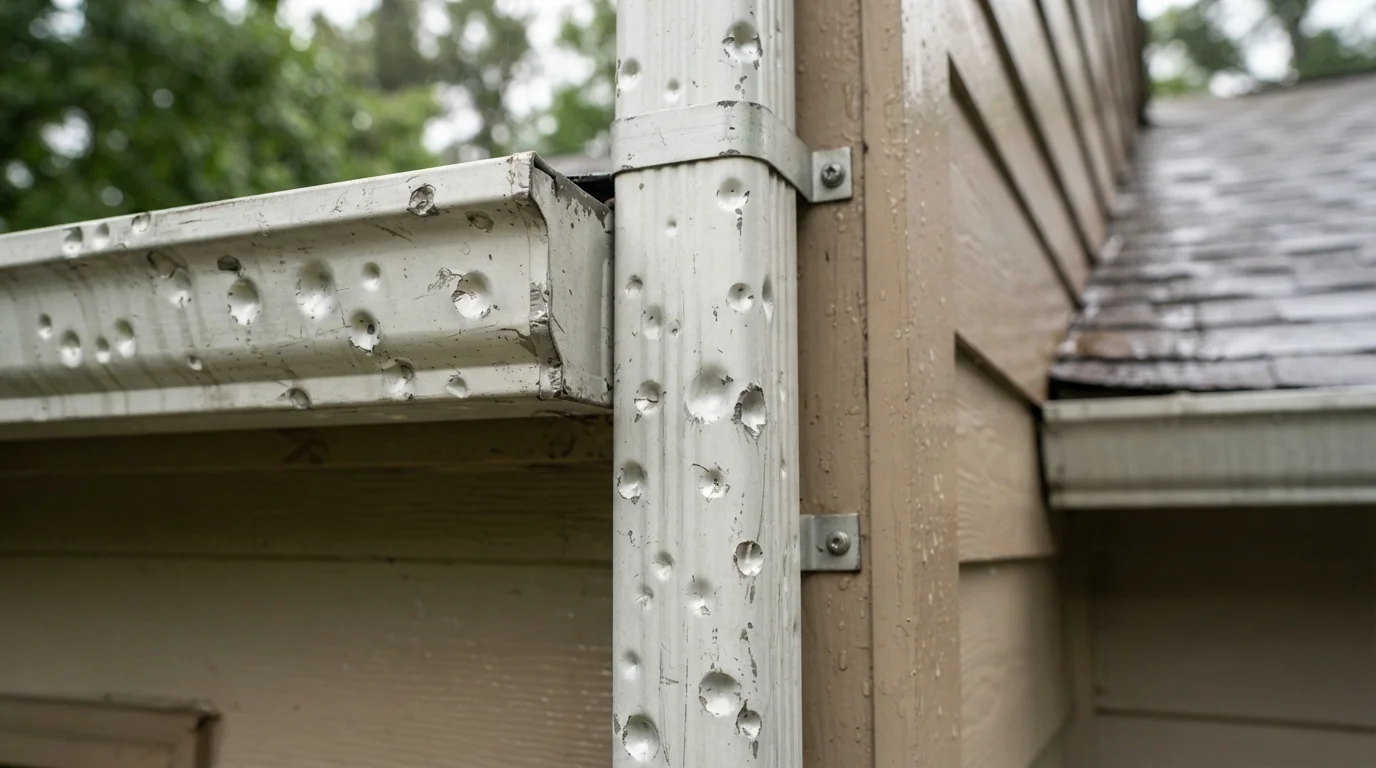
On the roof
What Hail Does to Shingles
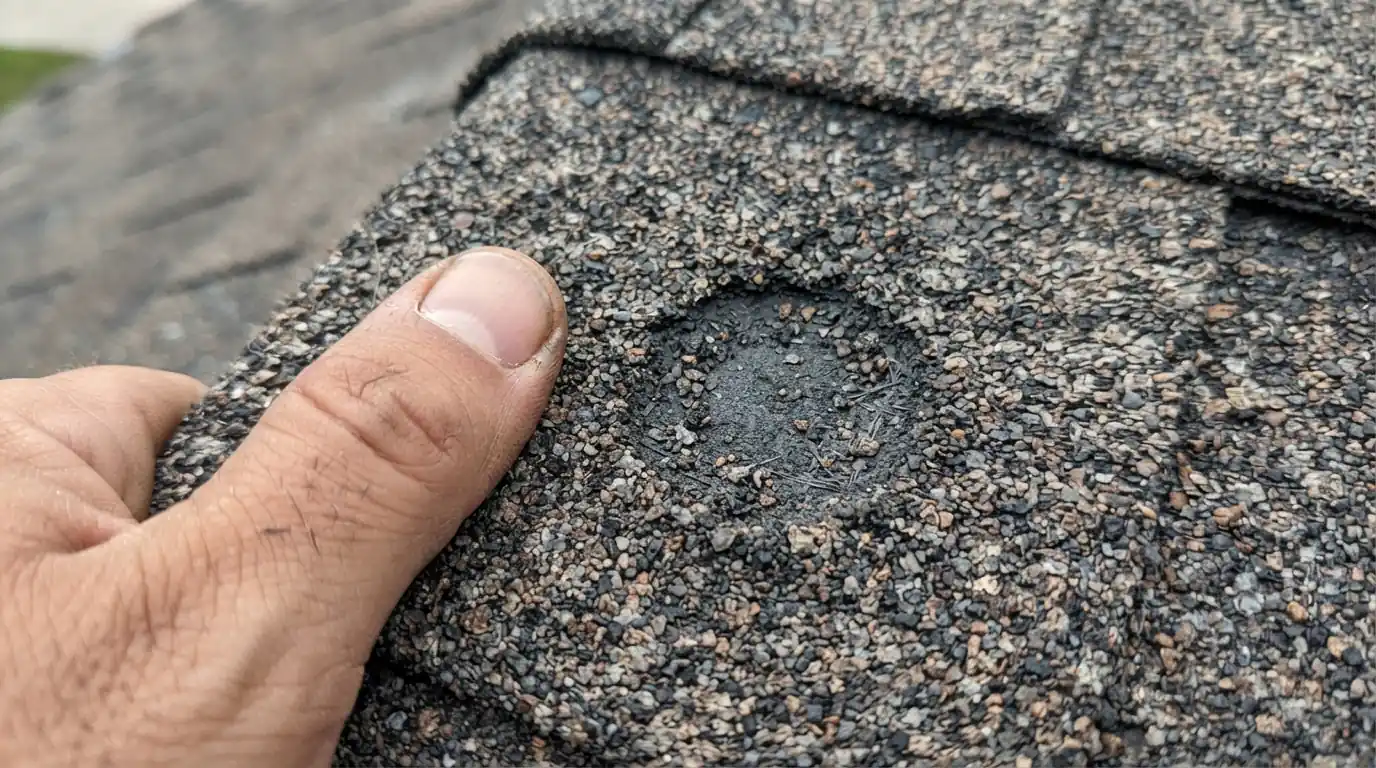
A hailstone crushes the shingle where it lands, leaving a round bruise that feels soft under a thumb and shows exposed asphalt where granules broke away. Harder hits crack the fiberglass mat underneath.
Dime-to-quarter hail and 60 mph gusts can do this without anything visible from the driveway. The damage does not leak right away; it ages the shingle faster, and leaks show up months later, long after most people have forgotten the storm.
Hail came through your street? Call and book an on-roof storm check with dated photos.
Call nowAct early
Why Timing Matters After a Storm
Fresh damage is easier to document. Bruises are clearly new, granule piles are still in the gutters, and dented metal matches the storm date.
Many policies also set a deadline for reporting storm damage. An inspection within days of the storm, with dated photos, keeps your options open even if you decide not to file.
Be careful
Handling Door-Knockers After a Hailstorm
After a big storm, crews from out of town often go door to door offering free inspections and asking for a signature on the spot. Some are legitimate; others sign up claims and are gone before the work is finished.
Take your time. Ask for photos of your own roof, a written scope and a local address you can actually visit. Do not sign anything that assigns your insurance benefits to a contractor until you have read it and talked to your carrier.
The process
What a Proper Hail Inspection Looks Like
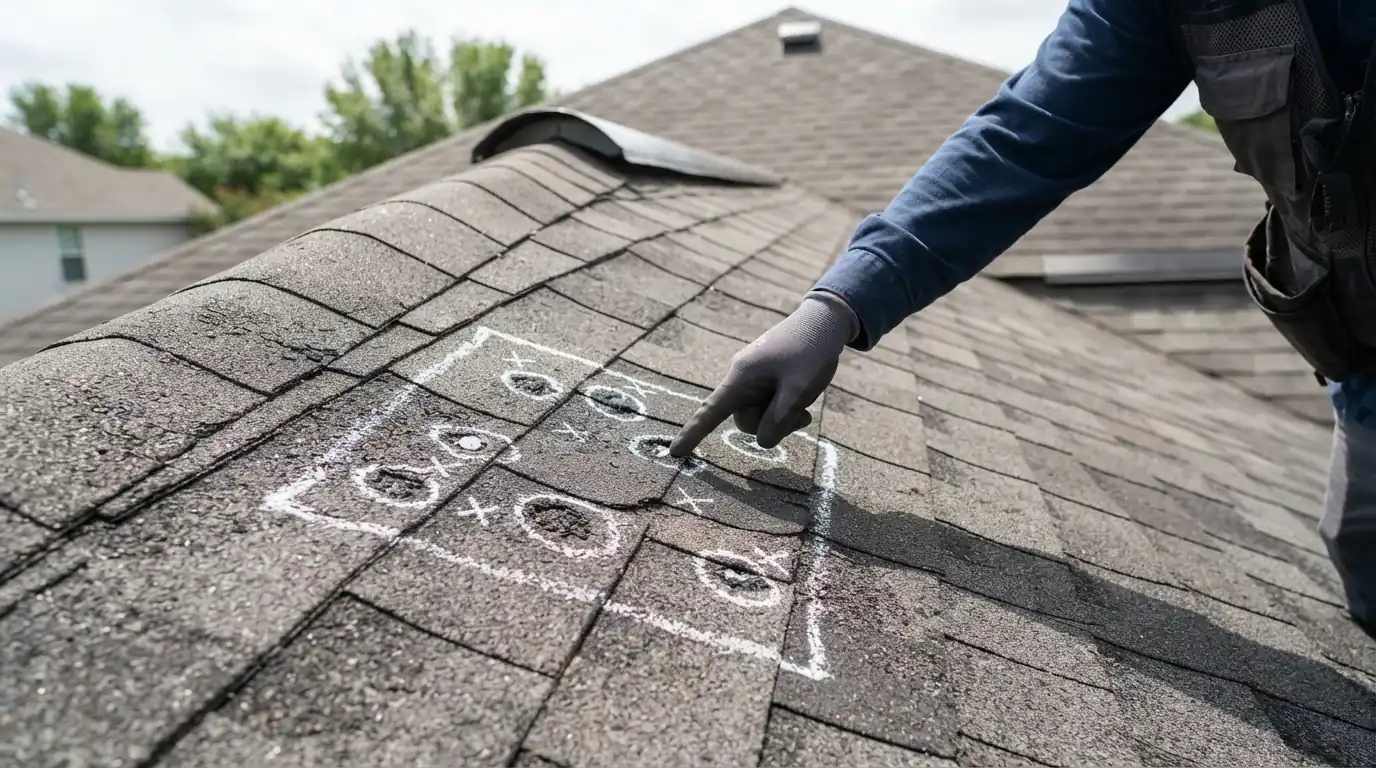
The inspector walks every slope, marks a test square on each, and counts and photographs the hits inside it. Vents, flashing, gutters and the ridge caps get checked too, since they take the most exposure. A look in the attic confirms whether any hits went through.
The result is a set of photos per slope and a written summary. If damage is real, that goes into a storm damage scope; if not, you have a dated record showing the roof was checked.
The decision
Repair or Replace After Hail
Scattered bruises on one or two slopes are usually repaired with matching shingles. Widespread hits across most slopes usually mean replacement, because repairing dozens of bruised shingles leaves a roof that is aging unevenly.
The insurer decides what it covers. Your job, and ours, is making sure the damage is documented well enough that the decision reflects what actually happened to the roof.
FAQ
What Homeowners Ask Next
Yes. Bruised shingles age faster and often leak months later.
Dime to quarter size with wind can bruise shingles; larger hail cracks them outright.
They show hail hit hard enough to matter. The shingles need to be checked from the roof.
Within days if you can. Damage is easier to document while it is fresh.
That depends on your carrier and policy. Ask them directly before deciding.
You can spot missing shingles or dented vents. Bruises almost always need a close look on the roof.
Large hail can dent some metal panels. Heavier gauges and textured finishes hold up better.
Related
Services and Guides on This Topic
Atlanta, GA service office
1421 Peachtree St NE FL. 3, Atlanta, GA 30361
Talk to a roofer today
Find out what the hail actually did
Call to book an on-roof storm check. You get photos from every slope and a straight answer on repair, replacement or nothing at all.