Answering 24/7
Fascia and Soffit Repair in Atlanta Before Rot and Critters Spread
The roof edge is where water leaves the house, which is why the wood there rots first, and why squirrels find their way in there too.
At a glance
- 24/7
- Calls answered
- Cause fixed
- Not just the board
- Primed all sides
- Before it goes up
- Atlanta
- Service office
Fascia and soffit repair in Atlanta usually traces back to water: gutters spilling behind the fascia or a missing drip edge rotting the wood from the top. We replace the rotted lengths, repair or replace soffit panels, seal the gaps squirrels use to reach the attic, and fix whatever let the water in.
Updated September 2026
The job
Why the Roof Edge Rots First
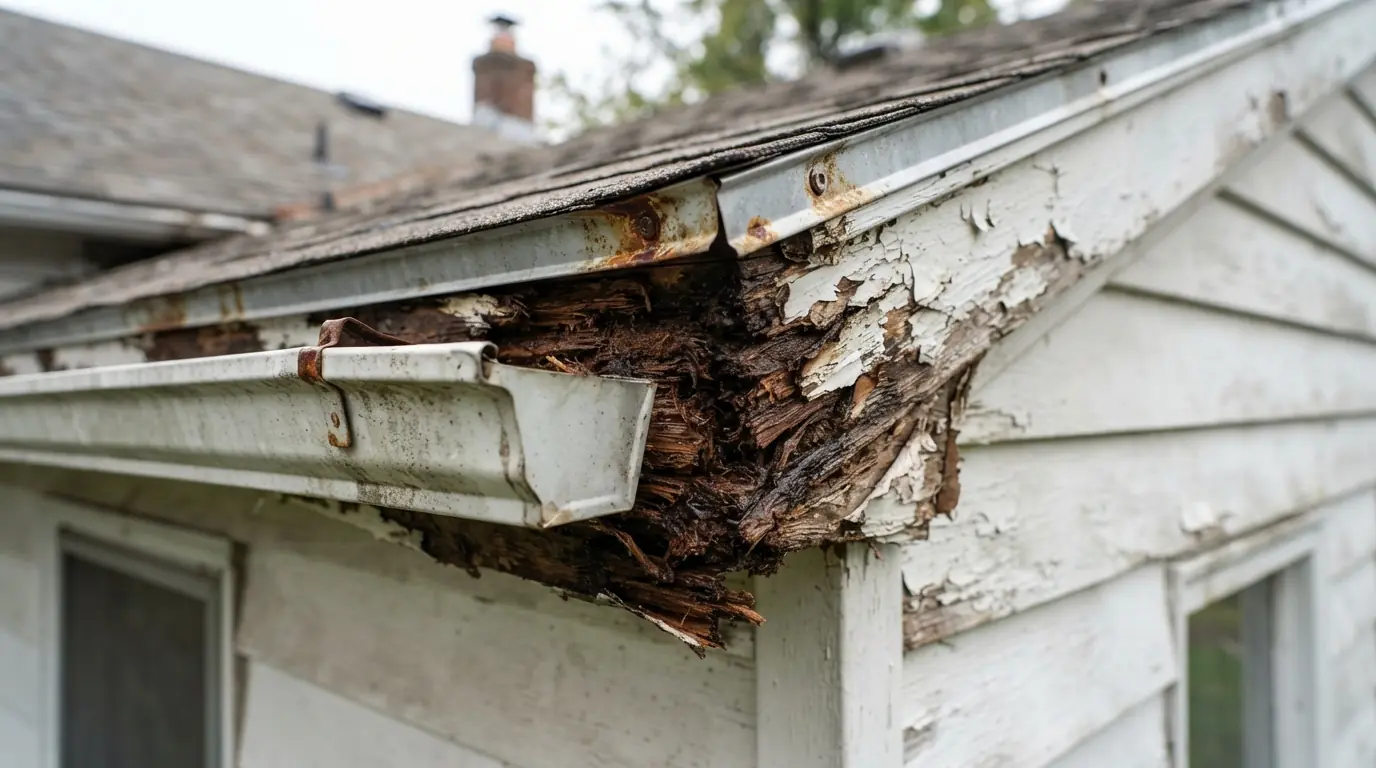
Fascia is the board along the roof edge that the gutter hangs on; soffit is the panel under the overhang. Both sit right where roof water leaves the house, so they rot first on an otherwise sound house.
Replacing a board without fixing the cause brings the rot back within a few seasons. Every job includes the drip edge, gutter hangers or flashing that sent water into the wood.
Signs to watch for
Signs of Fascia and Soffit Trouble
Peeling paint on the fascia
Moisture is getting into the wood.
Soft or crumbling boards
Press a screwdriver in; rot gives way.
Sagging soffit panels
The nailing behind has failed.
Chew marks or holes
Animals are testing or using the edge.
Gutter pulling away
Hangers have lost their grip in rotten wood.
Your options
Wood, Wrapped Wood or PVC Trim
Replacement trim comes in three families. Which one fits depends on the house and the street.
| Primed wood | Aluminum-wrapped wood | PVC or composite | |
|---|---|---|---|
| Look | Matches original trim | Smooth metal finish | Painted or white trim board |
| Upkeep | Repaint every few years | Little | Little |
| Rot risk | If paint fails | Hidden if water gets behind | Does not rot |
| Historic houses | Usually the right match | May need review | May need review |
What the work covers
Rotted Fascia Board Replacement
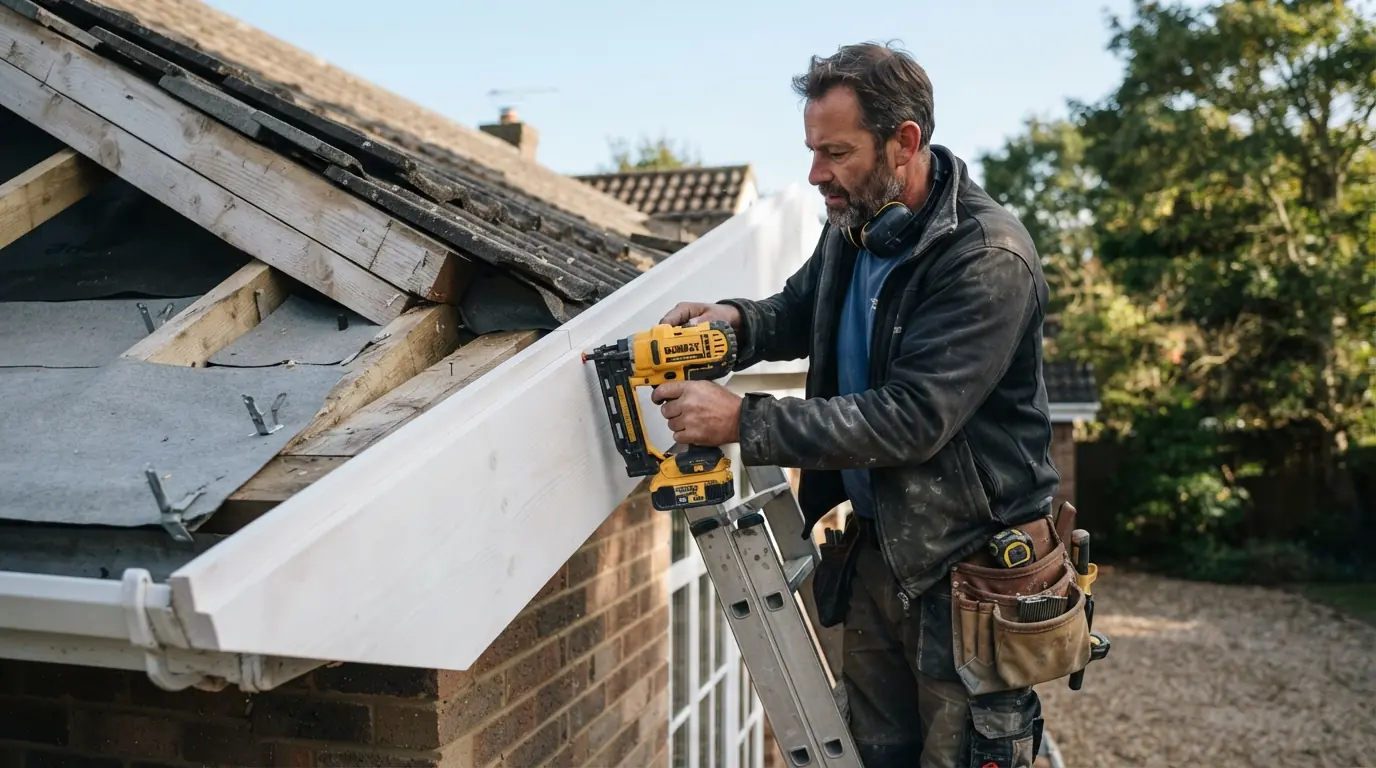
Rot usually starts at the top edge behind the gutter and at corners where two boards meet. We take the gutter down along the damaged length, cut out rotten fascia back to sound wood, and check the rafter tails behind it, since they often rot too. New boards are primed on all sides before they go up, joints are scarfed rather than butted, and the drip edge is set to carry water into the gutter instead of behind it. The gutter then goes back on hidden hangers.
Soffit Panel Repair
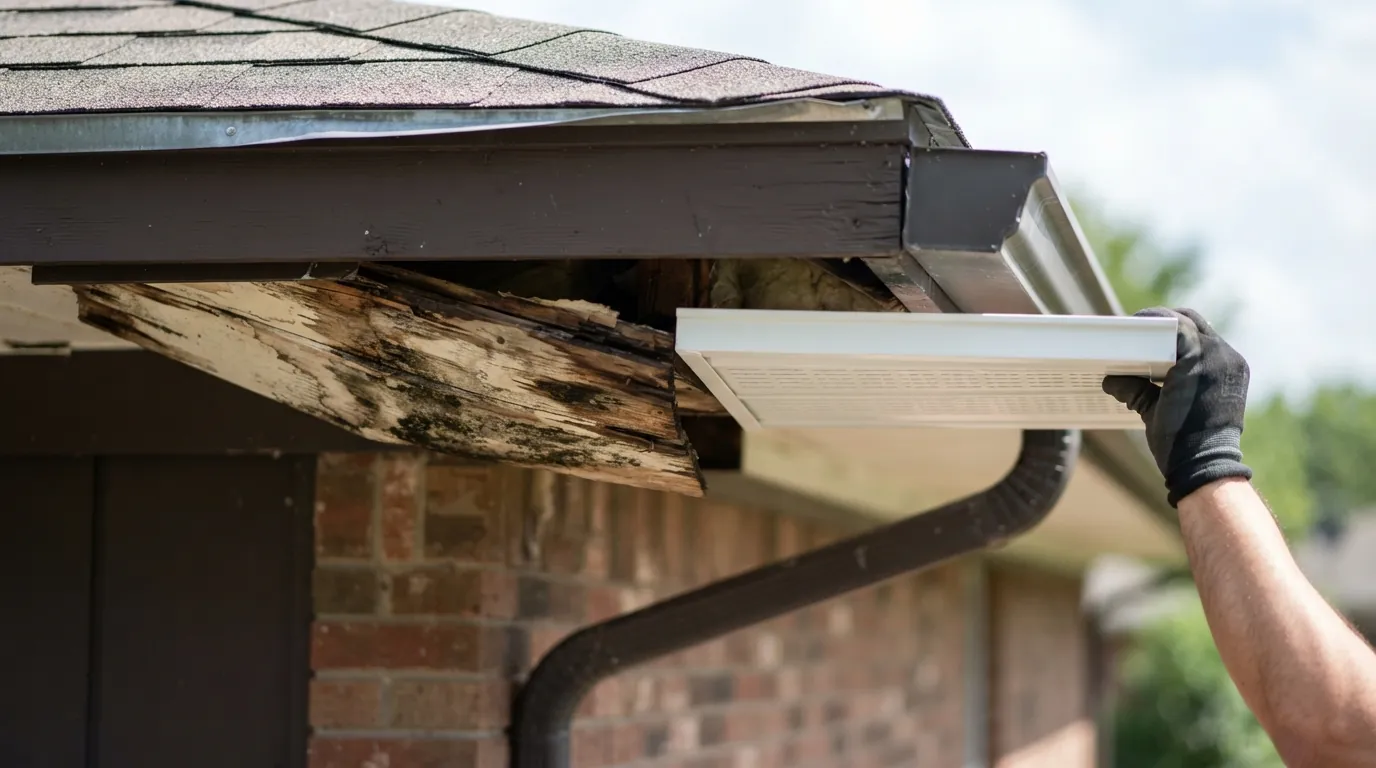
Soffits sag when the nailing behind them rots, and they stain when attic moisture or a roof leak runs down into them. Wood soffits are replaced in matching material and profile; vinyl and aluminum panels are replaced section by section. Where soffits have no ventilation, or vents painted over, we add vented panels so the attic can draw air at the eaves. Stains are traced to their source before the new panel goes up. That ties into attic ventilation, and it is cheapest to fix while the soffit is open.
Animal Entry Point Sealing
Squirrels, rats and birds get into attics at the roof edge: a soft corner of fascia they can chew through, a gap where the soffit meets the wall, or an open return at the gable. Once the animals are out, we close those openings with new wood, metal flashing or heavy screening, and replace chewed vent covers. We seal entry points and repair the damage; removing animals still living in the attic is a wildlife job that has to happen first.
What drives the price
What Fascia and Soffit Repair Costs Depend On
Fascia and soffit work is priced by the length of board and what is behind it.
Length of rot
Feet of fascia or soffit replaced.
Rafter tails
Rotted tails repaired behind the board.
Material
Wood, wrapped wood or PVC.
Gutter removal
Gutters taken down and re-hung.
Height
Second-story eaves need more setup.
Paint
Priming and finish paint to match.
Local conditions
Trim on Atlanta's Historic Houses
In Inman Park, replacing rotted fascia in kind counts as ordinary repair, but switching the material on a contributing house, say to aluminum wrap, is the kind of visible change the Urban Design Commission can review. West End sits in the same position: most houses there went up between 1870 and 1930 with original wood trim, so we replace like for like and match the profile rather than wrapping it.
Step by step
How a Fascia and Soffit Repair Runs
- 1
Call us
Describe rot, sagging or animal activity.
- 2
Inspect the edge
Boards probed, rafter tails and attic checked.
- 3
Find the cause
Gutter, drip edge or roof leak identified.
- 4
Written quote
Lengths, material and the fix for the cause.
- 5
Remove and replace
Gutter off, rot out, new boards up.
- 6
Seal the gaps
Entry points closed with wood, metal or screen.
- 7
Re-hang and finish
Gutter back on, trim primed and painted.
Questions we hear
Fascia and Soffit Questions
Water behind the gutter, a missing drip edge, or a roof leak at the eave. Replacing the board alone is not enough.
Not over rot. Wrapping hides decay and it keeps spreading, so rotten wood is replaced first.
Yes. New wood is primed on all sides and finish-painted to match.
We seal entry points once animals are out. Removal is a wildlife job that should come first.
Yes, and it is the cheapest time to do it. Vented panels help the attic breathe.
Often. Rotten fascia found at the drip edge is repaired while the roof is open.
Like-for-like repair usually does not. Changing materials on a contributing house can need Urban Design Commission review.
Related work
Repairs That Stop Edge Rot
Atlanta, GA service office
1421 Peachtree St NE FL. 3, Atlanta, GA 30361
Talk to a roofer today
Fix the edge before the rot or the squirrels spread
Call to book a look at the roof edge. We will find what sent water into the wood and quote the full fix in writing.