Answering 24/7
Roof Coating in Atlanta for Tired Low-Slope and Metal Roofs
A coating is not a fix for a failing roof. On a sound one that is weathering out, it can add years for a fraction of a tear-off.
At a glance
- 24/7
- Calls answered
- Cored first
- Moisture checked
- Reinforced
- Seams and fasteners
- Atlanta
- Service office
A roof coating in Atlanta only makes sense on a low-slope or metal roof that is still dry underneath, because a coating seals the surface but cannot fix wet insulation or a rotten deck. We core-test the roof first, repair seams and flashings, then apply silicone or acrylic at the thickness the system calls for.
Updated September 2026
The job
When a Coating Helps and When It Hides a Problem
Coatings get sold as a cheap replacement, and that is where they go wrong. Sprayed over wet insulation, a coating traps the moisture and the roof rots faster under a shiny new surface.
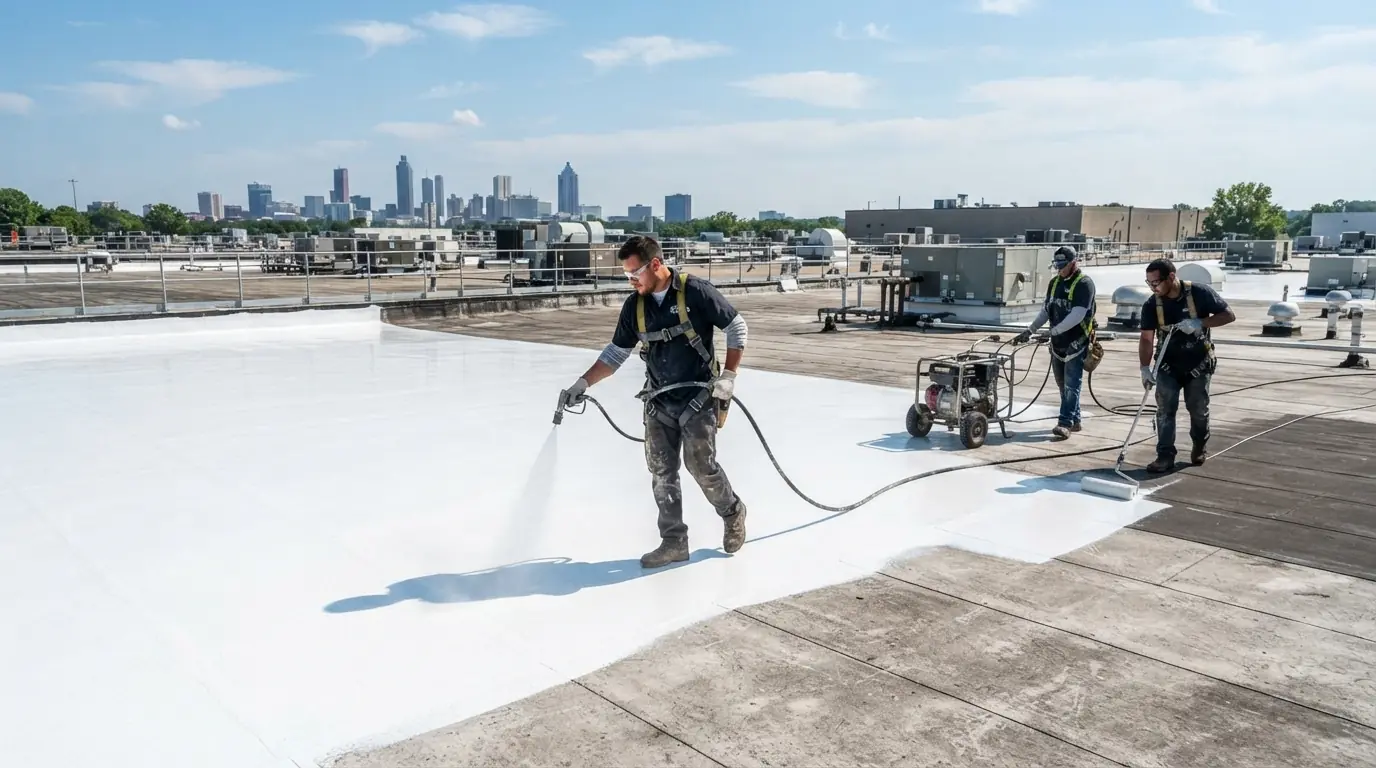
On the right roof, a fluid-applied membrane seals seams and fasteners, reflects summer sun and restores a weathered surface without tearing anything off. Most of the work is preparation: cleaning, repairs and primer where the substrate needs it.
Your options
Silicone or Acrylic for Your Roof
Both are white, reflective and fluid-applied. Drainage decides between them more than anything else.
| Silicone | Acrylic | |
|---|---|---|
| Standing water | Handles ponding well | Softens under ponding |
| Recoating later | Only silicone bonds to it | Easy to recoat |
| Dirt pickup | Collects dirt over time | Stays cleaner |
| Best fit | Low-slope roofs with puddles | Well-drained roofs and metal |
What the work covers
Silicone Roof Coating
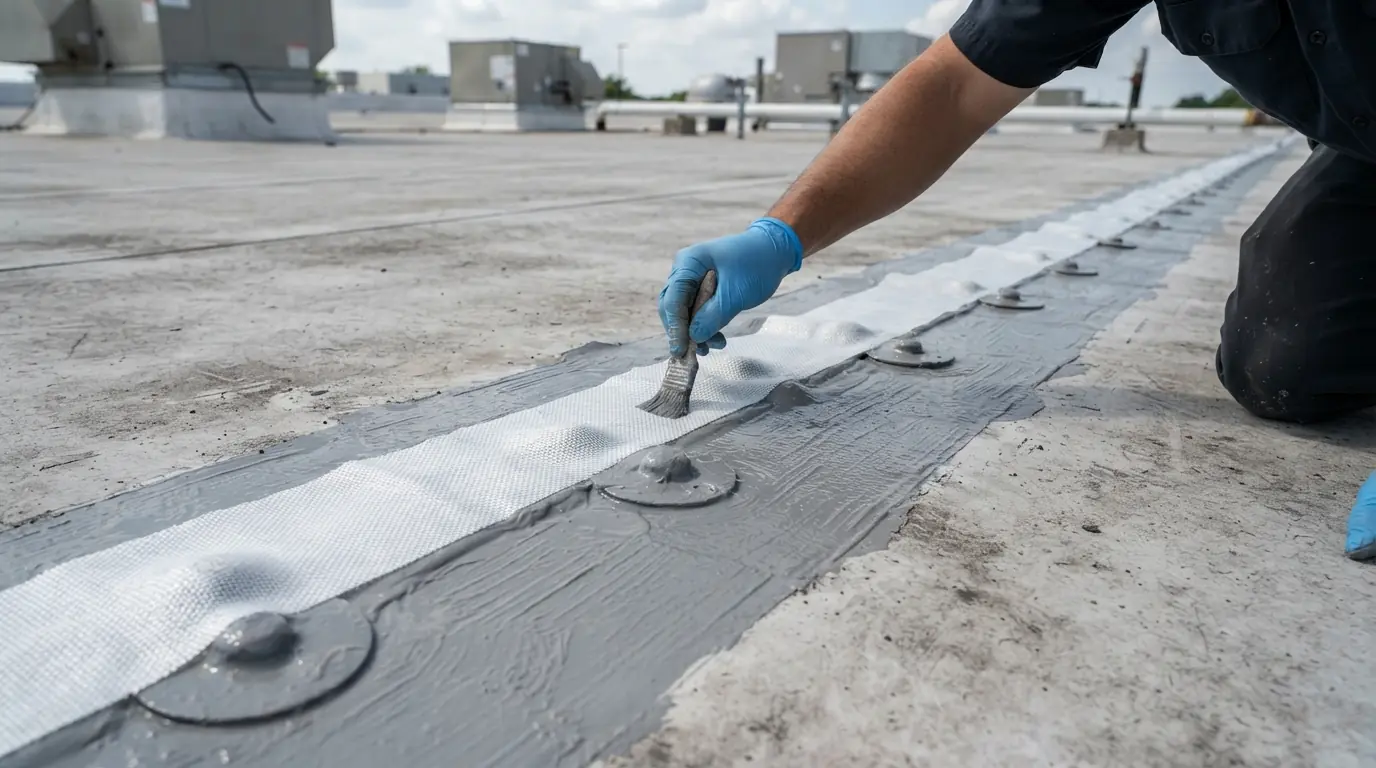
Silicone handles standing water better than any other coating, which matters on low-slope roofs where a few puddles linger after heavy rain. It resists UV breakdown and stays flexible through heat. The tradeoffs: silicone is slippery when wet, it collects dirt over time, and almost nothing but more silicone sticks to it later, so it commits the roof to silicone for every future recoat. We apply it over a cleaned, repaired surface with reinforcing fabric at seams and penetrations. Most silicone systems go on in one or two coats.
Acrylic Roof Coating
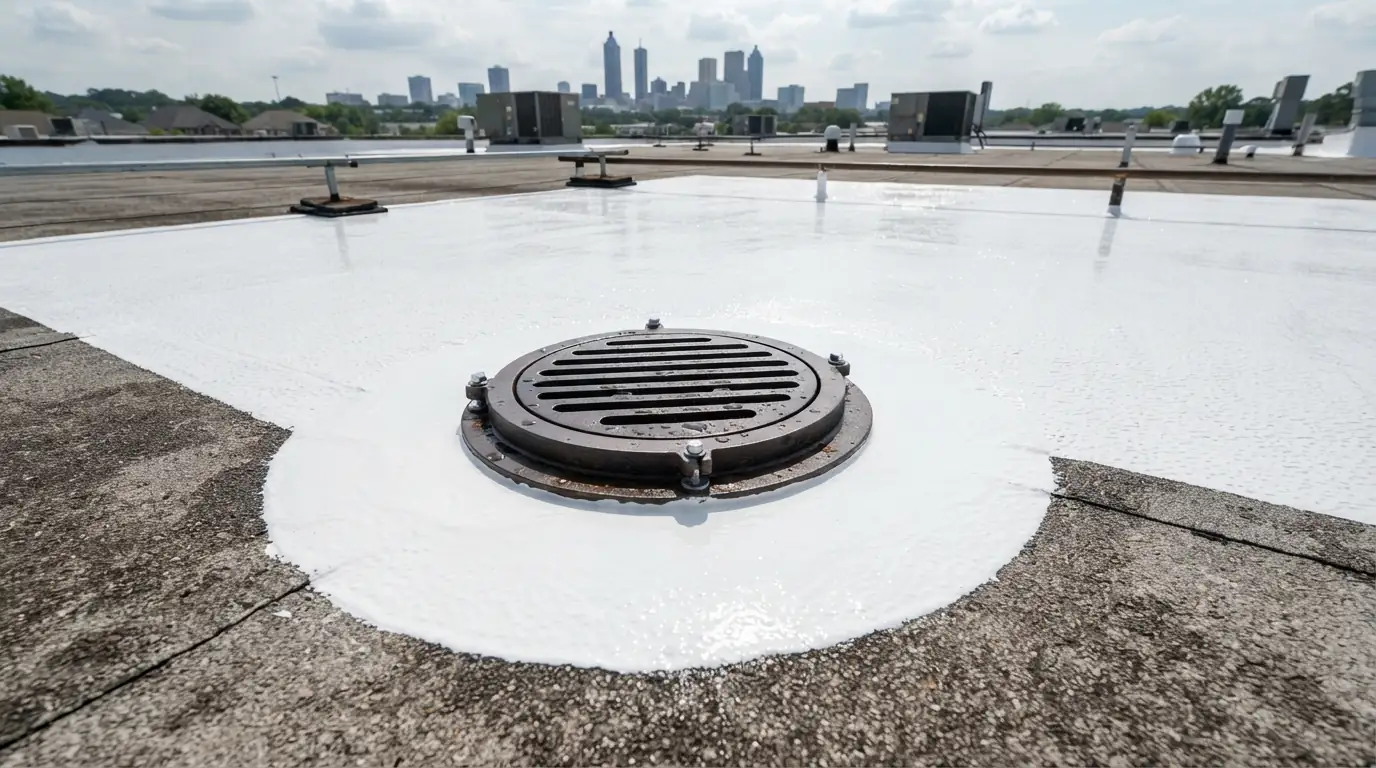
Acrylic coatings are water-based, bright white and reflective, and easy to recoat years later. They suit roofs with good drainage, because acrylic softens and can wash off under water that sits for days. On a well-sloped TPO, modified bitumen or metal roof, acrylic is often the economical choice. It cannot go down when rain or heavy overnight dew is coming, so the afternoon thunderstorm pattern decides our application windows as much as the calendar does. It usually goes on as a base coat and a top coat, often in contrasting colors so coverage can be checked.
Metal Roof Restoration Coating
Older exposed-fastener metal roofs on shops and warehouses leak at screws, laps and rust spots long before the panels fail. Restoration means replacing or sealing loose fasteners, treating rust, reinforcing laps and end seams with fabric and mastic, then coating the whole roof. The result is a continuous membrane over the metal that stops fastener leaks and slows corrosion. Panels rusted through are replaced first, and gutters and edge trim get the same rust treatment. Our commercial roofing page covers the wider range of low-slope work.
What drives the price
What Drives Roof Coating Cost
Coating is priced by area, but preparation drives more of the difference than the product.
Roof area
Square footage of surface to coat.
Moisture found
Wet areas cut out and replaced first.
Seam and fastener work
Fabric reinforcement at every joint.
Product
Silicone costs more than acrylic per gallon.
Thickness
Thicker systems last longer and cost more.
Access
Roof hatch, ladder or lift for materials.
Local conditions
Coating Around Atlanta's Storm Season
Forecasters logged 298 storm reports within 25 miles of Atlanta over the last twelve months, with hail up to an inch and 39 severe-weather days, most of them between March and August. That pattern shapes coating work here: a roof gets checked for hail punctures and bruised membrane before it is coated, never after, and each coat is scheduled around the afternoon thunderstorms that build through the warm months.
Step by step
How a Roof Coating Job Runs
- 1
Walk and core the roof
Moisture and substrate checked first.
- 2
Honest verdict
Coat, repair first, or replace.
- 3
Clean the surface
Dirt, chalking and debris removed.
- 4
Repairs
Wet areas, seams and flashings fixed.
- 5
Reinforce
Fabric and mastic at seams and fasteners.
- 6
Apply the coating
Base and top coats to the specified thickness.
- 7
Final check
Thickness measured and photos taken.
DIY or call a roofer
Bucket Kits Versus a Coating Crew
Coating kits are sold by the bucket. The bucket is the easy part.
| Doing it yourself | Having us do it | |
|---|---|---|
| Moisture check | Skipped | Core samples before quoting |
| Prep | A quick rinse | Cleaned, repaired, primed where needed |
| Seams and fasteners | Coated over | Reinforced with fabric first |
| Thickness | Rolled thin | Measured to the system's spec |
Questions we hear
Roof Coating Questions
Only when the leaks are at seams or fasteners on an otherwise dry roof. Wet insulation has to be replaced first.
It depends on the product and the thickness applied. Thicker systems last longer and can be recoated instead of torn off.
We do not recommend it. Coatings are made for low-slope and metal roofs, and coated shingles trap moisture.
It reflects sun and lowers roof surface temperature, which helps most on buildings with little insulation.
Yes, between storms. Coatings need dry weather while they cure, so we schedule around the forecast.
Silicone where water ponds; acrylic on well-drained roofs and metal where easy recoating matters.
No. The work happens on the roof and most buildings stay open.
Related work
Other Low-Slope and Commercial Work
Atlanta, GA service office
1421 Peachtree St NE FL. 3, Atlanta, GA 30361
Talk to a roofer today
Find out if your roof can be coated
Call to book a look. We will core the roof, tell you whether a coating is worth it, and put the prep work in writing.