Answering 24/7 for leaks and estimates
Flat Roof Replacement in Atlanta for Porches, Additions and Shops
Low-slope roofs on porches, rear additions and small commercial buildings wear out differently from shingles. When the membrane is done, we strip it to the deck and start clean.
At a glance
- 24/7
- Calls answered
- 3 membranes
- TPO, mod bit, EPDM
- To the deck
- Full tear-off
- Atlanta
- Service office
Flat roof replacement in Atlanta comes down to three membranes, TPO, modified bitumen or EPDM, installed over a repaired deck with enough slope that water reaches the drain instead of ponding. We tear off to the deck, replace soft sheathing and pick the membrane by how the roof is used and what it joins.
Updated September 2026
The job
Why Flat Roofs Pond and What Replacement Fixes
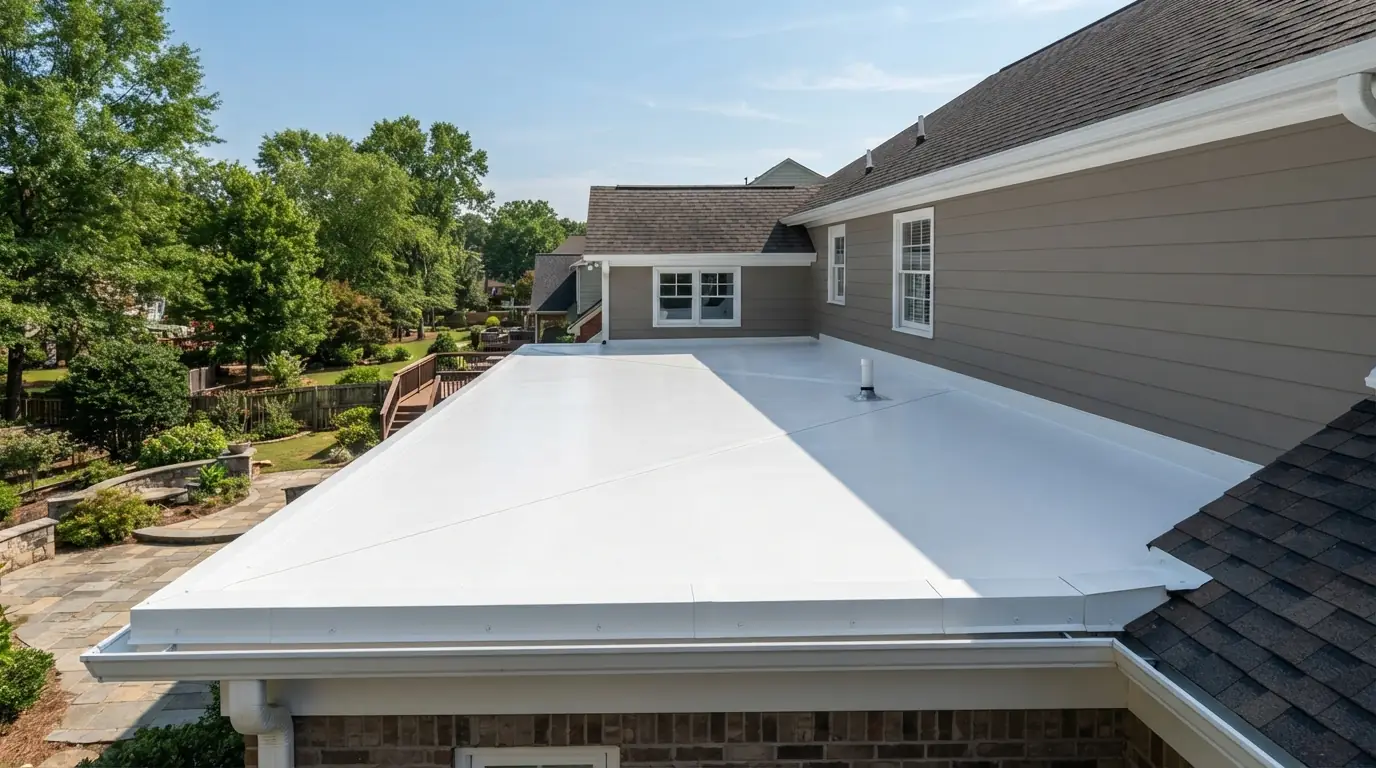
A flat roof is rarely flat. It needs roughly a quarter inch of fall per foot to drain, and a worn low-slope roof has often lost that fall to sagging joists or wet insulation, which is why water sits on it.
Replacement fixes the cause, not only the surface. We correct the slope with tapered insulation or crickets where the deck allows, rebuild the edges and scuppers, and tie the new membrane into the wall or shingled roof above it, which is where most flat roof leaks begin.
Your options
TPO, Modified Bitumen or EPDM for Your Roof
Three membranes cover nearly every low-slope roof we replace, and each one is right somewhere.
| TPO | Modified bitumen | EPDM | |
|---|---|---|---|
| Seams | Heat-welded | Torched, self-adhered or cold | Taped |
| Surface | White, reflective | Granulated cap sheet | Black or white rubber |
| Foot traffic | Moderate | Handles it best | Moderate |
| Best fit | Commercial, larger additions | Porches, balconies, walk-on roofs | Small additions, carports |
What the work covers
TPO Membrane Roofing
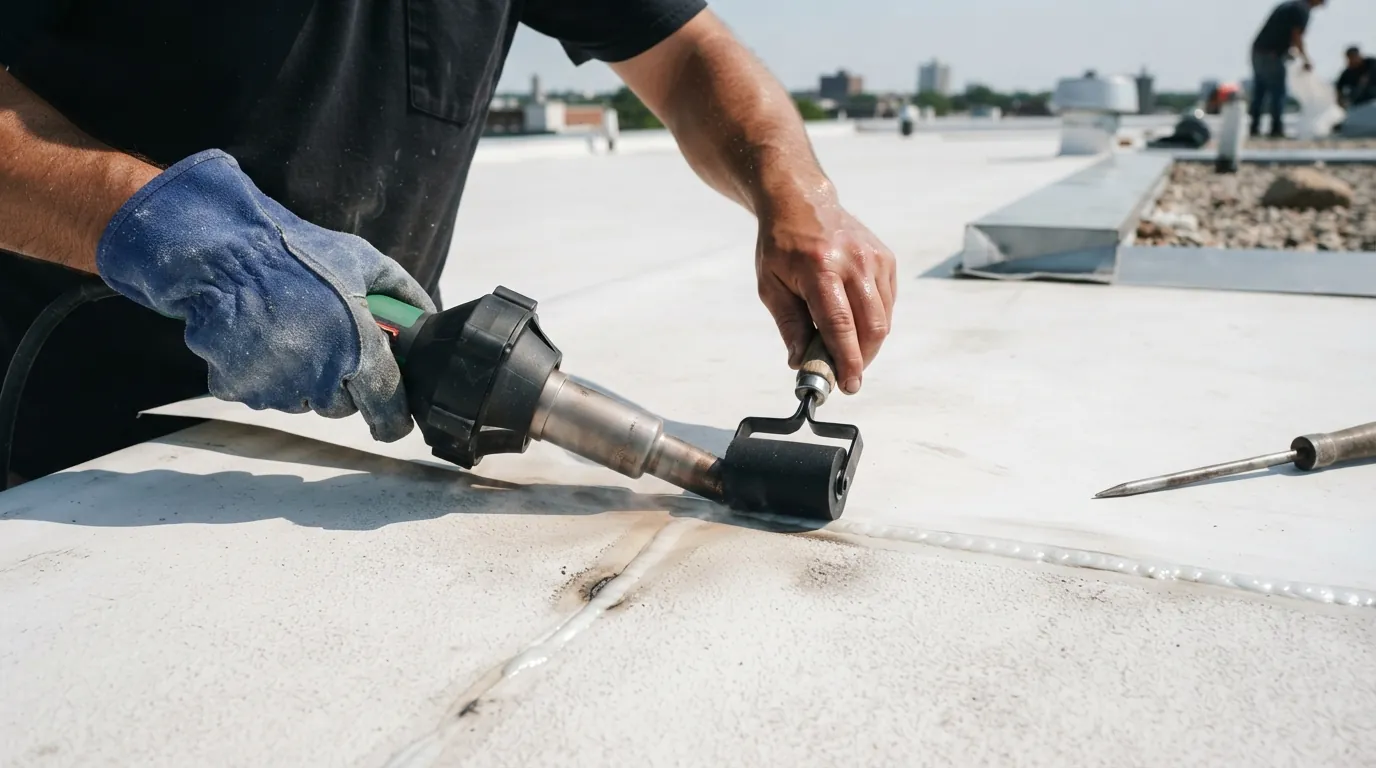
TPO is a white single-ply sheet with heat-welded seams. The welds fuse into one continuous membrane, which is why it performs well on larger roofs with several penetrations, and the white surface reflects summer sun off the space below. It suits small commercial buildings and rear additions where the roof is out of sight. We weld every seam with a hot-air machine and probe each one before we leave. GAF, Carlisle and Firestone all make the TPO lines we install on these roofs.
Modified Bitumen Roofing
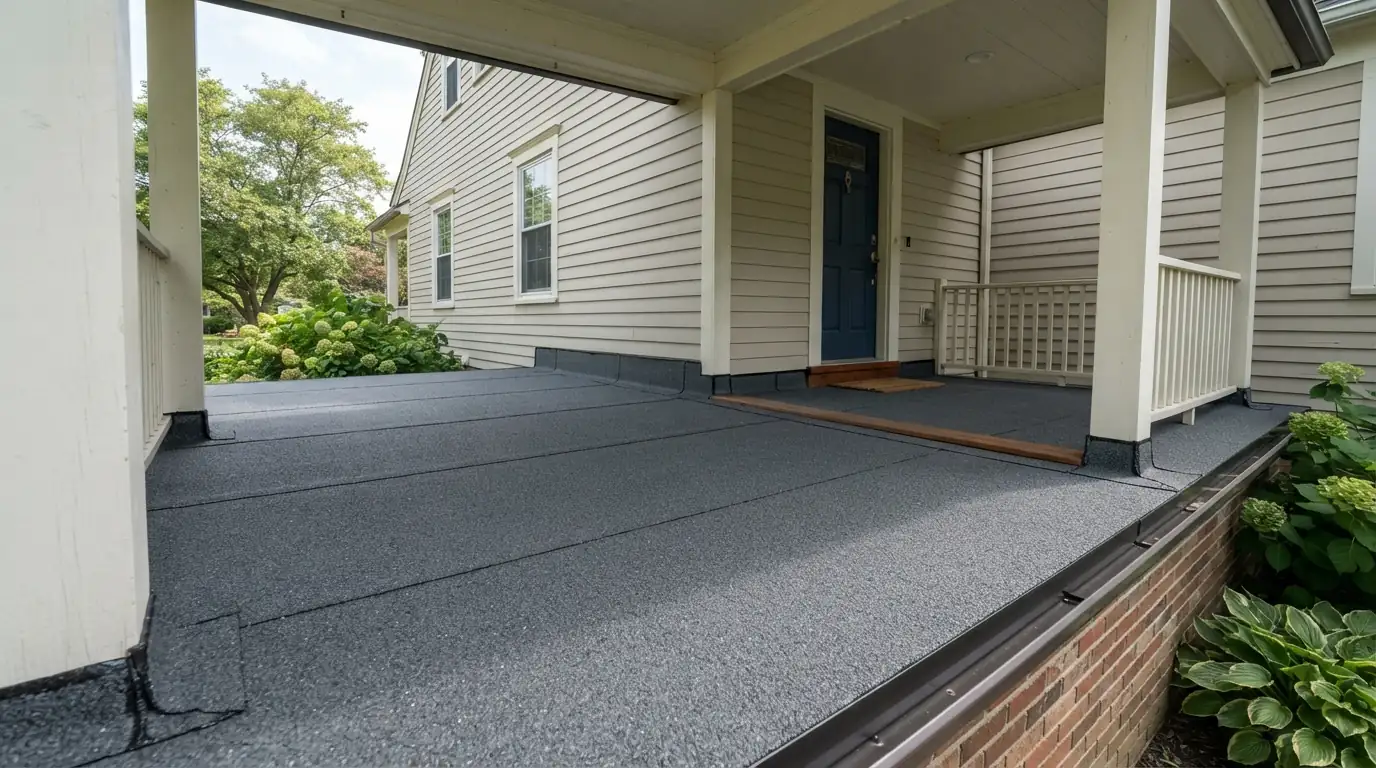
Modified bitumen is asphalt reinforced with polyester or fiberglass, laid in rolls with overlapping seams that are torched, self-adhered or cold-applied. It handles foot traffic better than single-ply, so it is common on porch roofs, balconies and anywhere a technician walks to reach equipment. The granulated cap sheet blends with a shingled roof next to it. On wood-frame houses we favor self-adhered sheets such as Polyglass lines, which keep open flame off the building. Seams are rolled and checked by hand.
EPDM Rubber Roofing
EPDM is a synthetic rubber membrane, usually black, installed in large sheets with few seams. It stays flexible through heat and cold and is simple to patch years later, which makes it a practical choice for a small addition or carport. Seams are taped rather than welded, so the detailing around vents and walls matters more. Black EPDM absorbs heat, and a white version exists when the space below is living space. Carlisle and Firestone make the sheets we install.
What drives the price
What Drives Flat Roof Replacement Cost
Low-slope pricing depends more on the details than on the square footage.
Membrane type
TPO, modified bitumen and EPDM differ in material and labor.
Deck condition
Wet or rotted sheathing found at tear-off is replaced first.
Drainage correction
Tapered insulation or crickets add cost and end ponding.
Penetrations and curbs
Every vent, skylight and unit curb needs its own flashing.
Wall and roof tie-ins
Where the flat roof meets siding or shingles takes the most care.
Access
Tight lots and second-story roofs slow tear-off and loading.
Local conditions
Atlanta Rain and the Weak Points of a Low-Slope Roof
Atlanta gets more rain than most of the country, and that rain finds a flat roof's weak points: a seam that opened, a scupper that clogged, a low spot that holds water after every storm. Months of ponding soften the deck, which is why a replacement quote here carries a line for wet sheathing found at tear-off. Asphalt shingle is still the city's most common roof, so on houses the flat section almost always meets a shingled main roof, and that tie-in is detailed first.
What is included
What a Flat Roof Replacement Includes
- Tear-off of the old membrane and any wet insulation
- Deck inspection and replacement of soft sheathing
- Slope correction with tapered insulation where needed
- New insulation or cover board for the chosen system
- Membrane installed with welded, taped or rolled seams
- New edge metal and termination bars
- Flashing at walls, curbs, vents and skylights
- Drains and scuppers cleared and flashed
- Debris hauled away and the finished roof photographed
Step by step
How We Replace a Flat Roof
- 1
Inspect and measure
Wet insulation located and the deck checked from above and below.
- 2
Choose the membrane
TPO, mod bit or EPDM matched to use and budget.
- 3
Tear off to the deck
Old layers and wet insulation removed completely.
- 4
Repair the deck
Soft sheathing replaced; slope corrected where needed.
- 5
Install the system
Insulation and membrane fastened or adhered, seams closed.
- 6
Flash every edge
Walls, curbs, drains and edge metal detailed.
- 7
Water test and cleanup
Drains checked, debris hauled, finished roof photographed.
Brands we install and service
Questions we hear
Flat Roof Questions
One recover layer is sometimes allowed, but we rarely advise it. Moisture trapped in the old roof keeps rotting the deck under the new membrane.
Modified bitumen, usually. It takes foot traffic and its granulated surface blends with the shingles next to it.
Sagging joists, wet or crushed insulation, or a clogged drain. Replacement lets us correct the slope instead of patching around the puddle.
Yes, on small retail, office and warehouse buildings as well as home additions. Larger jobs are phased so the business keeps running.
TPO's welded seams and white surface suit larger or sunnier roofs; EPDM is simple, flexible and easy to repair on small ones.
No. Self-adhered, welded and taped systems avoid the hot-asphalt kettles used on older built-up roofs.
You see photos and the method for replacing it before the membrane goes down, so the added cost is never a surprise.
Atlanta, GA service office
1421 Peachtree St NE FL. 3, Atlanta, GA 30361
Talk to a roofer today
Get a flat roof that drains
Call to set a visit. We will find where the water sits, tell you which membrane fits the roof, and put the full scope in writing.