Tarp crews dispatched 24/7
Emergency Roof Tarping in Atlanta, Day or Night
A limb through the roof or a slope stripped of shingles? Tonight's job is keeping rain out of the attic.
At a glance
- 24/7
- Calls answered
- Battened
- Never weighted with bricks
- Photos
- Before anything moves
- Atlanta
- Service office
An emergency roof tarp in Atlanta should go on the same night the roof is opened, because one more storm can soak the decking and insulation below. We lap a heavy tarp over the ridge, fasten it with wood battens rather than sandbags, and photograph the damage first so any claim starts with a record.
Updated September 2026
Step by step
What Happens After You Call About Storm Damage
- 1
Call and describe it
Tell us what came through and whether water is inside.
- 2
Safety check first
Power lines, hanging limbs and sagging ceilings are checked before anyone climbs.
- 3
Photos before anything moves
Every damaged area is photographed for the record.
- 4
Clear the debris
Limbs and torn shingles come off; loose tabs are secured.
- 5
Sheathing over big holes
Plywood spans any opening wider than a rafter bay.
- 6
Tarp over the ridge
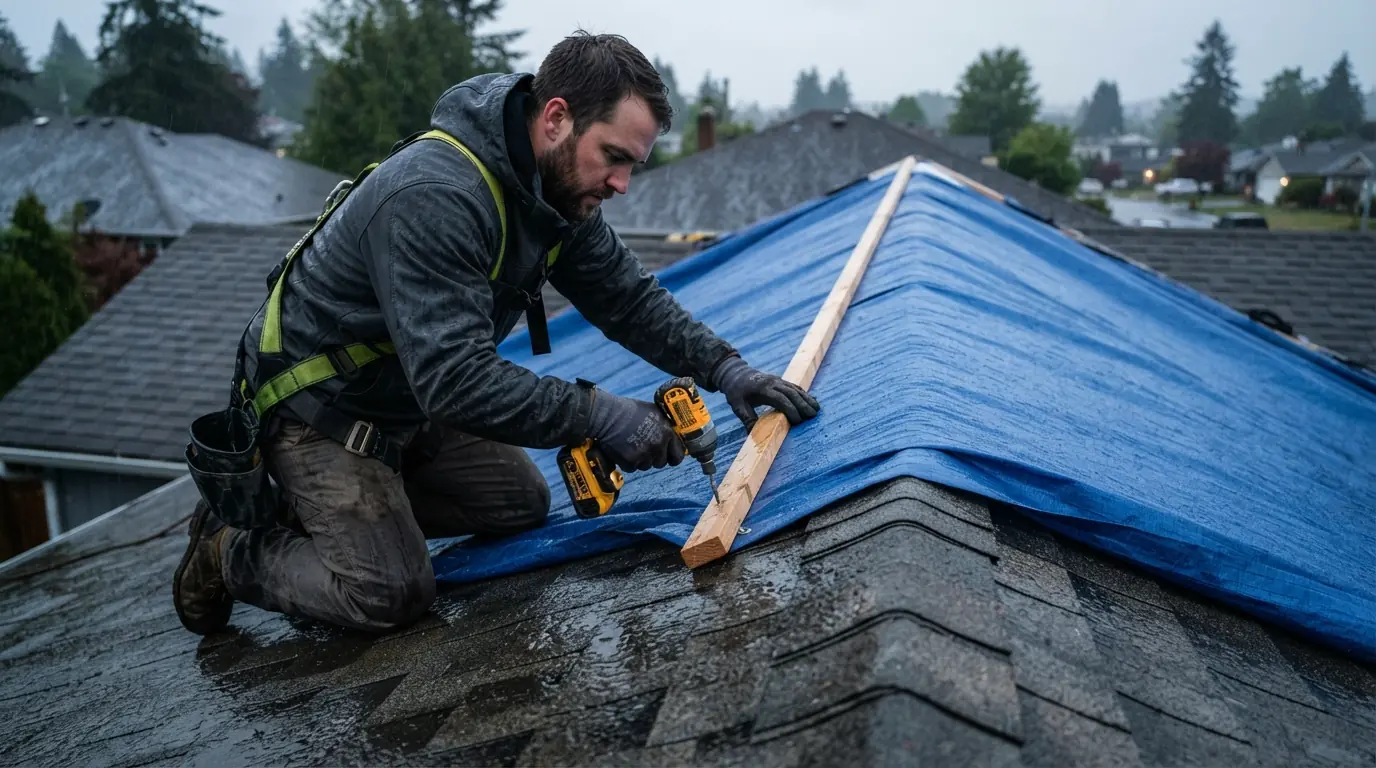
Heavy tarp lapped past the ridge, battens screwed on every edge.
- 7
Repair plan in writing
Measured damage, photos and a date for the permanent fix.
The job
Why a Tarp Has to Be Battened and Lapped Over the Ridge
A tarp is not a repair. It is a temporary skin that has to survive wind, pine debris and the next downpour until the damaged area is rebuilt. Tarps weighted with bricks or stapled along one edge tend to let water run underneath within a day.
Ours go over the ridge whenever the damage allows, so water sheds off the top instead of into the gap. Battens are screwed through the tarp along every edge.
What the work covers
Tree Strike Tarping
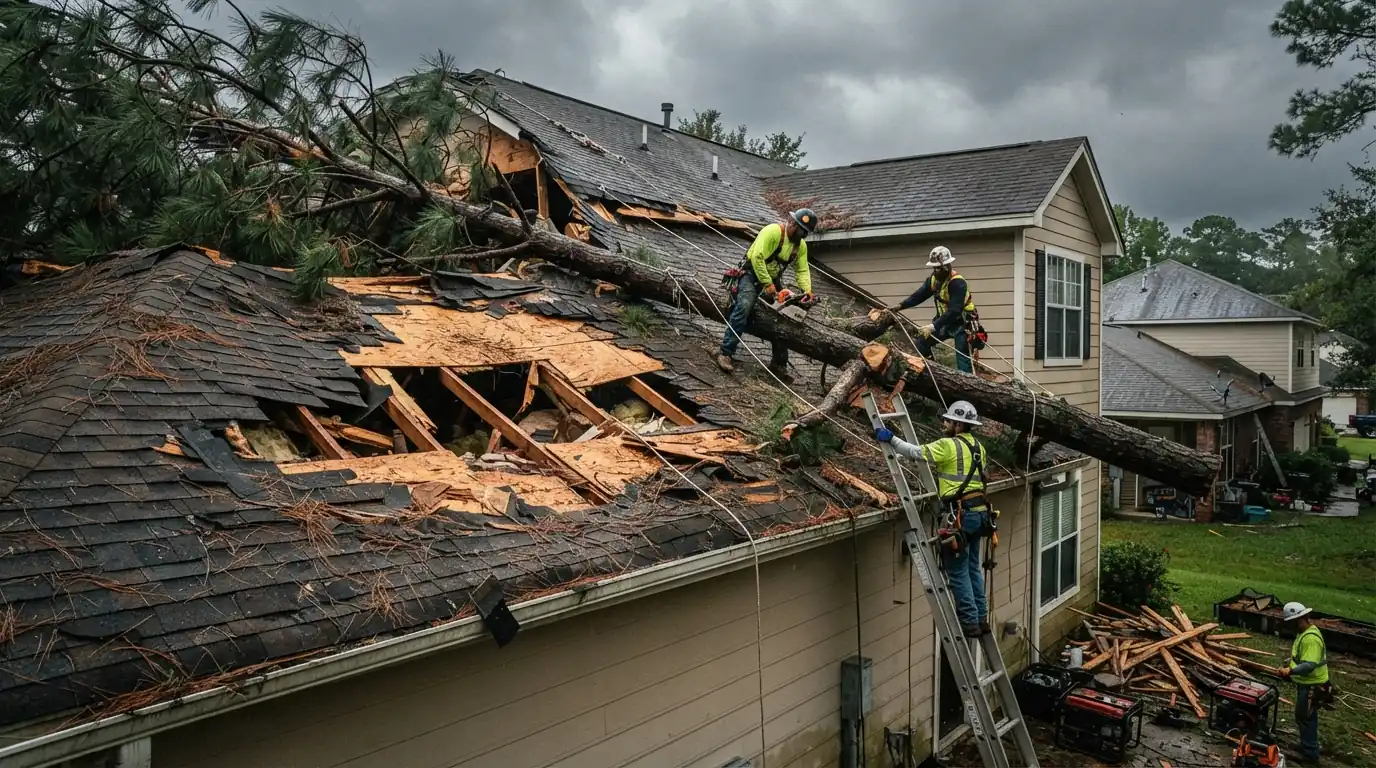
Pines and water oaks drop limbs straight through decking in summer storms. Before a tarp goes over that kind of hole, the limb comes off the roof and anything hanging into the attic is cut back so it cannot tear the tarp from below. Openings wider than a rafter bay get plywood first, then the tarp goes over the plywood and past the ridge. A ceiling sagging with water gets flagged to you before anyone walks under it. If the tree still leans on the house, it has to be lifted off first.
Blown-Off Section Cover
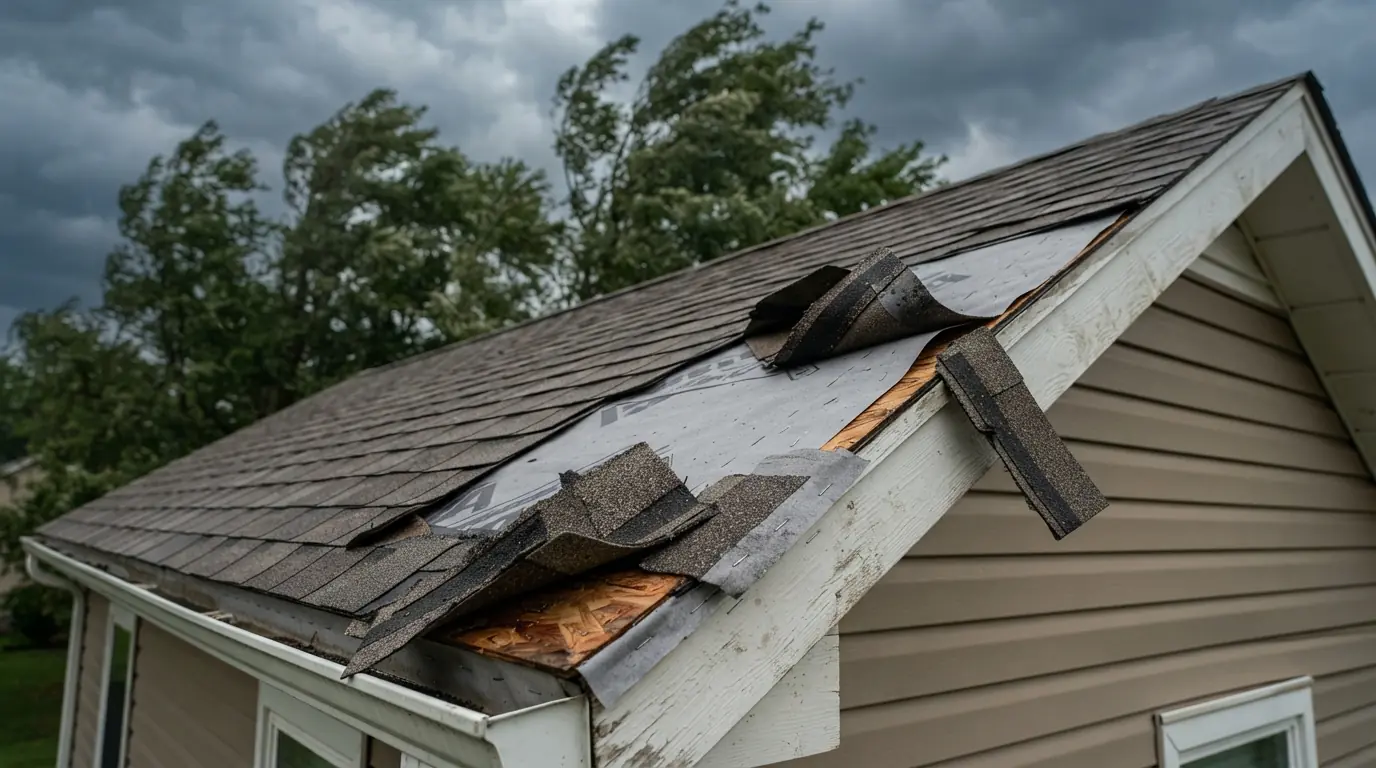
Wind rarely takes a whole roof. It takes a strip along the rake edge or a patch where the shingle seal had already let go, and the exposed underlayment starts tearing within hours. We tarp the exposed area plus a margin of intact shingles around it, because the shingles next to a blow-off are usually lifted too even when they look flat. Loose tabs inside the tarped zone are pressed down and secured so they cannot flap and cut the tarp. On steep or two-story slopes we set roof jacks first.
Tarp to Repair Handoff
A good tarp buys weeks, not a season. Sun breaks down the polyethylene and battens loosen as the wood swells and dries. So the tarp visit ends with a plan: the photos, the measured damage and a date for the permanent fix. When a claim is involved, the tarp stays until the adjuster has seen the roof, and damaged shingles stay documented. The rebuild then runs through our storm damage roof repair process, or a decking repair where the wood underneath broke.
Local conditions
Where Atlanta Trees Put Holes in Roofs
Tree fall is one of the main reasons Atlanta roofs get opened up, and the canopy explains it: about 46 percent of the city was still under trees in 2023, and 61 percent of single-family land is covered. Neighborhoods along Nancy Creek and Utoy Creek run past 70 percent canopy, so a single windstorm puts far more limbs on roofs there than downtown, where cover is under 5 percent.
DIY or call a roofer
Tarping It Yourself Versus Calling a Crew
Tarping looks simple from the ground. On a wet slope it is how storms turn into injuries.
| Doing it yourself | Having us do it | |
|---|---|---|
| Getting on the roof | Ladder on wet ground, often at night | Roof jacks and fall protection on steep slopes |
| Holding it down | Bricks or sandbags that slide off in wind | Wood battens screwed along every edge |
| The top edge | Often stops short, water runs under it | Lapped over the ridge so water sheds off |
| Claim record | Photos taken later, if at all | Damage photographed before anything moves |
Water coming through the ceiling right now? Call and we will send the next tarp crew.
Call for a tarp nowWhat drives the price
What Changes the Cost of an Emergency Tarp
Tarping is priced on the size of the opening and how hard it is to reach, and you hear the number before the work starts.
Size of the damaged area
A small blow-off takes one tarp; a limb across a valley can need two lapped together.
Pitch and height
Steep and two-story slopes need roof jacks and more time on the roof.
Debris to clear first
Limbs and torn shingles come off before the cover goes on.
Plywood over holes
Openings wider than a rafter bay get sheathing under the tarp.
Access around the house
Fences, pools, power lines and tight side yards change the setup.
Claim documentation
Documented tarping is usually part of a storm claim.
Questions we hear
Emergency Tarping Questions
Weeks, not months. Sun and wind wear it down, so the permanent repair is scheduled during the tarp visit.
Please do not. Wet roofs at night are where homeowners get hurt. A bucket, towels and moved furniture are safer until we arrive.
Once lightning has passed and the slope is safe to stand on, yes. During lightning or high wind we wait and start the moment it clears.
Many policies expect you to prevent further damage, and tarping is commonly part of a storm claim. Your carrier decides; we give you the photos and invoice.
Limbs lying on the roof, yes. A whole tree resting on the house needs a tree crew first.
Move belongings, catch the water and stay clear of light fixtures, then call. We send the next tarp crew.
Yes. Low-slope roofs get a temporary membrane patch or a taped cover sized to the opening, since there is no ridge to lap over.
Related work
Repairs That Usually Follow a Tarp
Atlanta, GA service office
1421 Peachtree St NE FL. 3, Atlanta, GA 30361
Talk to a roofer today
Get the water stopped tonight
Call any hour and we will send the next available tarp crew, then plan the repair with you in daylight.