Roofing guide
Your Roof Is Leaking in Atlanta. Here Is What to Do First
The first hour of a roof leak decides how much you repair later. None of it involves climbing onto a wet roof.
Talk to a roofer
A person answers any hour and can put a crew on the schedule while you are on the line.
Answered 24/7(470) 291-8924By Karl Sutton, Residential Roofing Writer · Updated September 2026
When a roof starts leaking in Atlanta, the first hour is about limiting damage: move belongings, catch the water, drain a bulging ceiling at its low point, and keep clear of light fixtures. Then photograph everything and call a roofer to tarp the roof; the permanent repair comes once the roof is dry.
Right now
In the First Ten Minutes
Move furniture, electronics and rugs out from under the drip. Put down a bucket with a towel inside it so the splash stays quiet and contained, and lay towels around it. If water is running near a ceiling light, a fan or an outlet, switch off that circuit at the breaker panel before you do anything else in the room.
Then look for a second drip. Water spreads along the ceiling and often shows up in two or three places, including closets and hallways you do not check often.
Drywall
What to Do About a Bulging Ceiling
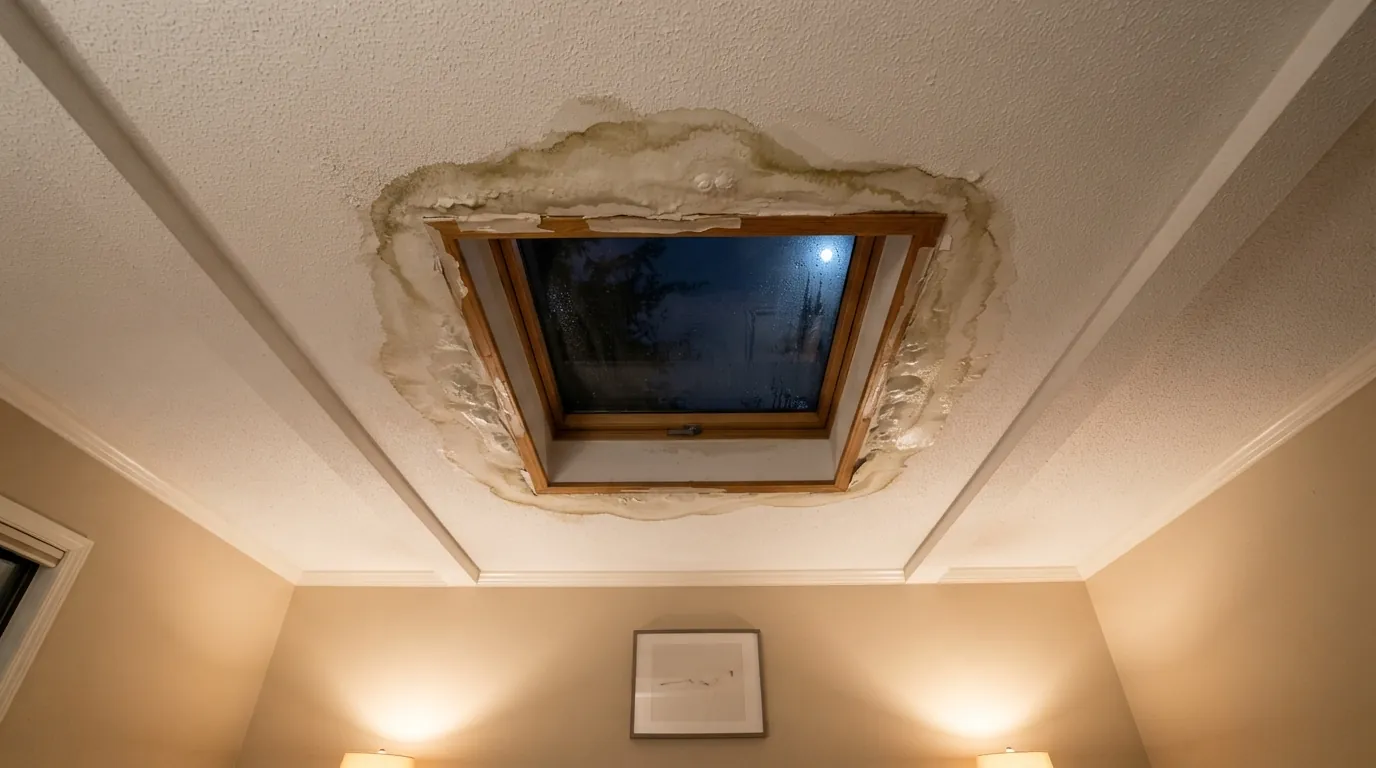
A ceiling that sags into a bubble is holding water. Left alone, it can tear open and dump everything at once, and it can bring down a larger section of drywall with it.
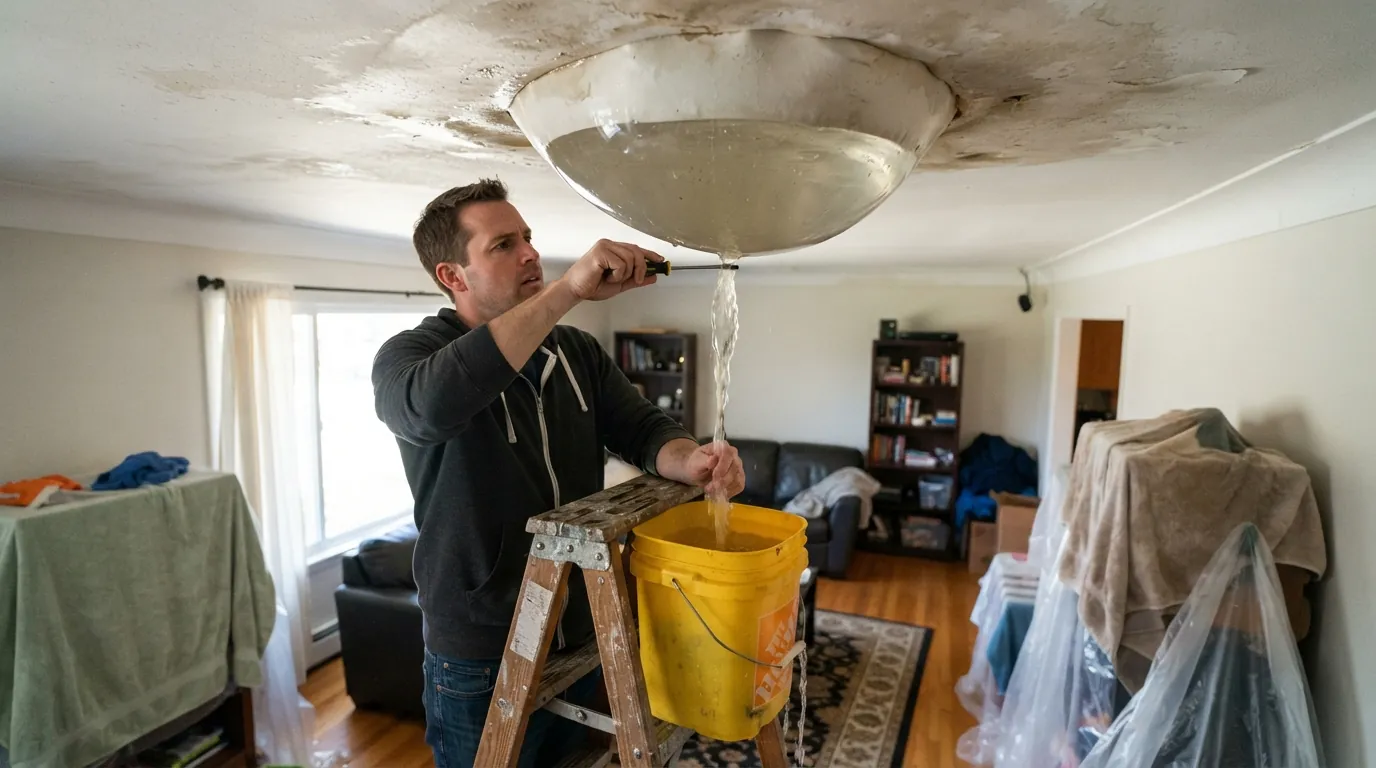
Put a bucket under the lowest point and push a screwdriver through the center of the bubble. The water drains in a controlled stream, the ceiling stops loading, and the hole is a small patch later. Keep clear of any light fixture while you do it.
Safety
Why You Should Not Go on the Roof Tonight
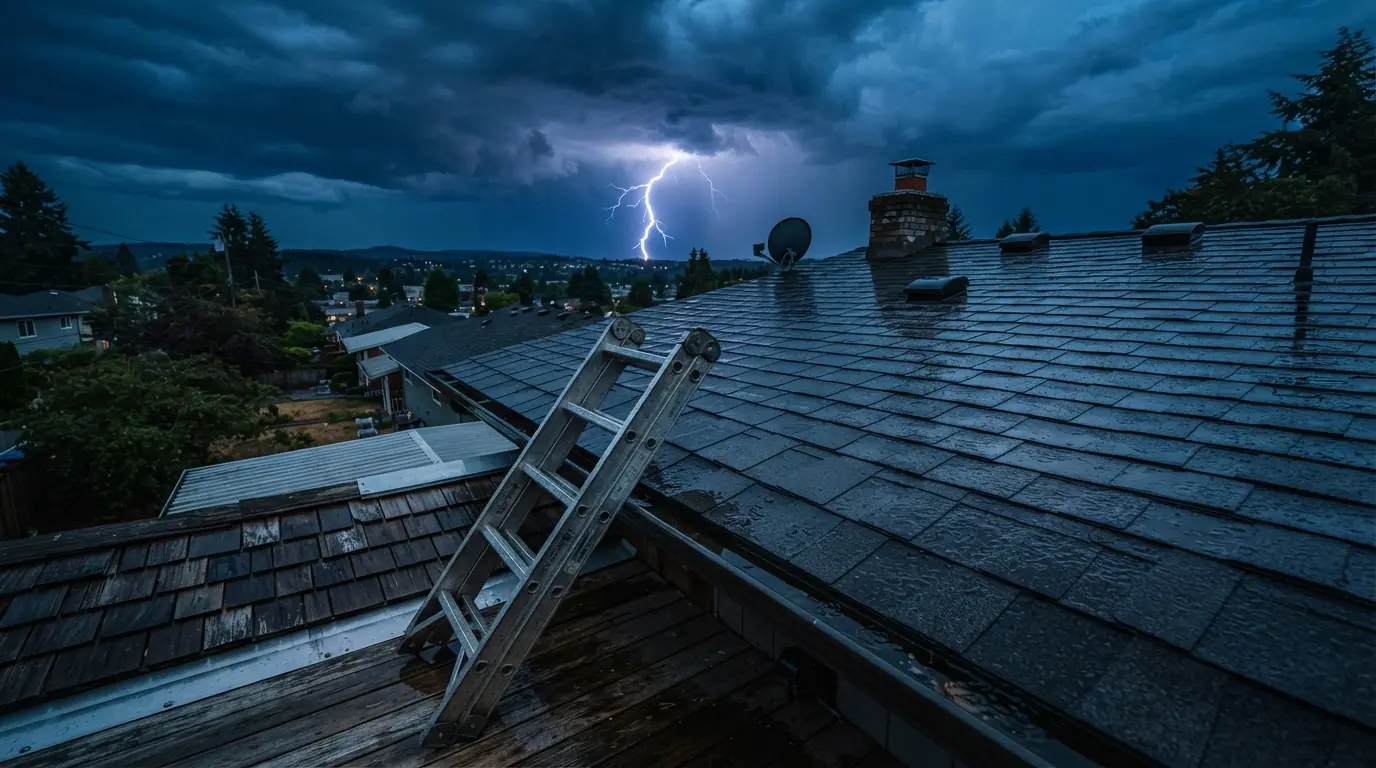
Wet shingles are slick, and a ladder on soft ground at night is how storm damage turns into an injury. Lightning makes it worse. A tarp put on from a wet roof in the dark also rarely holds, because it gets weighted with whatever is at hand rather than battened.
Your job tonight is the inside of the house. The roof is a job for a crew with roof jacks and daylight or proper lighting, which is why emergency tarping exists.
Water coming in right now? Call any hour and we will send the next tarp crew.
Call nowFor the claim
Document It Before Anything Is Cleaned Up
Take photos and short videos of the stain, the drip, the wet floor and anything damaged, with the date visible if your phone shows it. Note when the storm hit and when the water appeared.
Keep damaged items until your carrier has seen them or told you otherwise. Many policies expect you to prevent further damage, so keep receipts for towels, fans and the tarp. Those records make the claim conversation much shorter.
The tarp
What a Roofer Does on the First Visit
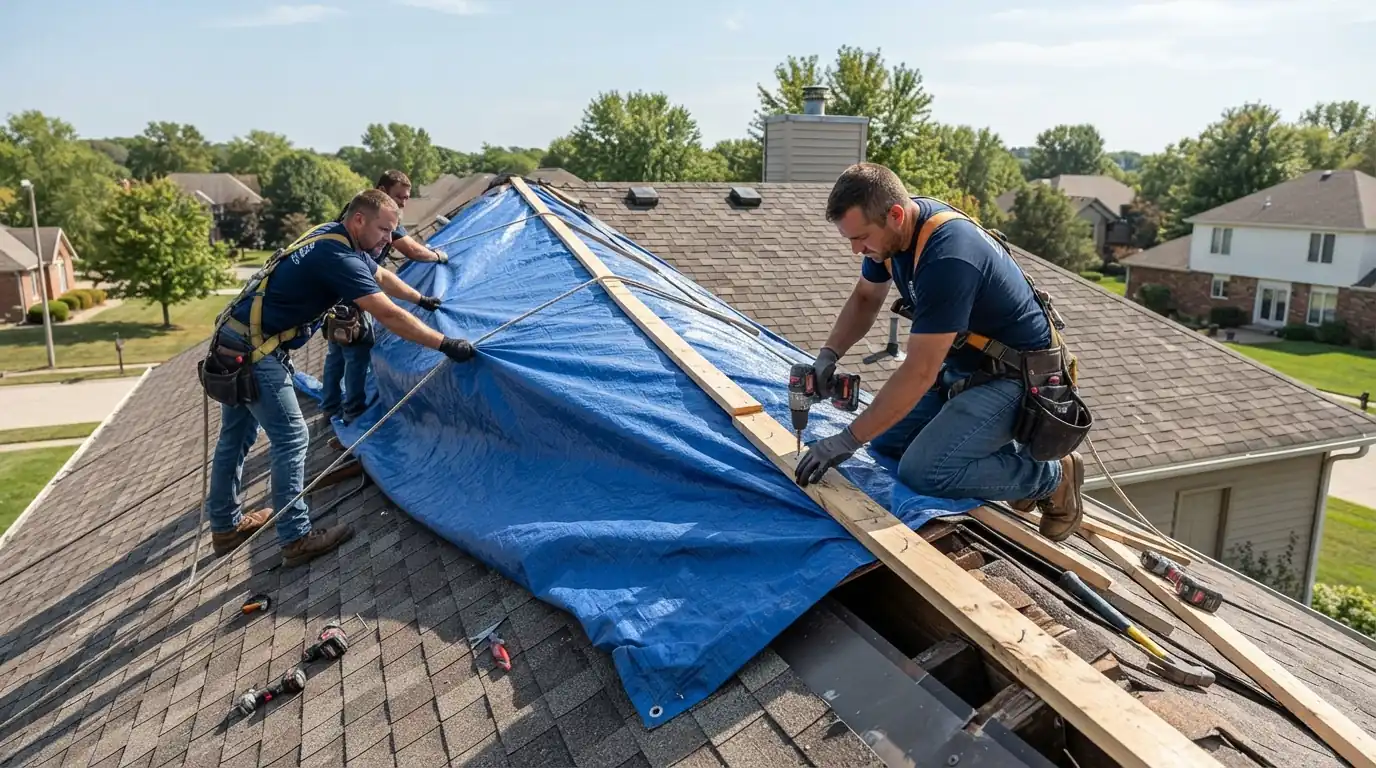
A good first visit has three steps: photograph the roof before anything is moved, clear loose debris, and put on a heavy tarp lapped over the ridge and screwed down with wood battens along every edge. Holes wider than a rafter bay get plywood first.
The roofer should also look in the attic, because the stain on your ceiling is rarely under the hole in the roof. The tarp visit ends with a plan and a date for the permanent repair.
The repair
Finding the Real Source Once It Is Dry
Water travels along decking and rafters before it drips, so the entry point is often feet away from the stain. In Atlanta the usual culprits are cracked rubber pipe boots, valleys packed with pine needles, chimney and wall flashing, and shingle tabs that wind lifted and broke loose.
Once the roof is dry, the leak is traced from the attic uphill and the failed part is replaced rather than caulked. Our leak repair page covers how that works.
Prevention
Keeping the Next Leak From Happening
Most leaks start at the same few places, so a little upkeep goes a long way. Keep valleys and gutters clear of pine needles and sweetgum balls, which hold water against the shingle edges. Have rubber pipe boots checked every year or two, since they crack in the sun long before the shingles wear out.
After any storm with strong wind, look for shingles in the yard or granules at the downspouts. A yearly maintenance visit covers the rest: nail pops, dried sealant and flashing that has started to lift.
FAQ
Common Follow-Up Questions
Stop the damage first, which means a roofer for the tarp. Call the carrier once the water is under control.
Usually, as long as water is away from electrical fixtures and the ceiling is not sagging over where people sleep.
It can be tarped once lightning passes. Permanent repairs wait for a dry roof.
Switch off that circuit at the breaker, catch the water and keep people away from the fixture until it is checked.
Small stains often dry and can be sealed and painted. Soaked or sagging drywall usually gets cut out after the roof is fixed.
The same day if you can. Each new rain adds water to the decking and insulation.
It will come back with the next storm. Get it traced while the stain is fresh.
Atlanta, GA service office
1421 Peachtree St NE FL. 3, Atlanta, GA 30361
Talk to a roofer today
Get the water stopped, then get it fixed right
Call any hour. We tarp tonight, trace the leak once it is dry and fix the part that failed.