Answering 24/7, visits by appointment
Roof Maintenance in Atlanta Before Storm Season and After Leaf Drop
Most leaks start as five-minute problems nobody saw. A maintenance visit finds them while they are still five-minute problems.
At a glance
- 24/7
- Calls answered
- Every slope
- Walked and photographed
- Quick fixes
- Done on the spot
- Atlanta
- Service office
Roof maintenance on an Atlanta home is a once- or twice-a-year visit, ideally before the March-to-August storm season and again after the fall leaf drop. We clear valleys and gutters, reseal exposed nail heads and flashing, check pipe boots and vents, and photograph anything that needs a real repair.
Updated September 2026
The job
Small Problems a Maintenance Visit Catches
Most leaks begin cheap: a nail that backed out, sealant that dried and cracked, a valley packed with pine needles that holds water against the shingles. Caught on a maintenance visit, each takes minutes.
The visit is a walk of every slope with a checklist, and the fixes that take minutes get done on the spot. Anything bigger is photographed and quoted separately, so maintenance never turns into a surprise bill.
What is included
What Our Roof Maintenance Visit Covers
- Walk of every slope with photos
- Valleys and roof-to-wall joints cleared
- Gutters and downspouts flushed
- Nail pops reset and sealed
- Cracked sealant cut out and replaced
- Pipe boots and vents inspected
- Chimney and skylight flashing checked
- Attic check for stains, damp and daylight
- Written notes on anything that needs repair
Local conditions
What Atlanta Trees and Storms Leave on a Roof
Loblolly pine is the most common tree in Atlanta, with sweetgum right behind it, and between them they fill valleys and gutters with needles and spiny seed balls year after year. Storms do the rest. The National Weather Service office for the region notes that even a late-September pattern can turn a few storms a day severe across north Georgia, with damaging wind the main hazard, so a fall visit catches loosened tabs before winter rain.
What the work covers
Sealant and Nail Pop Refresh
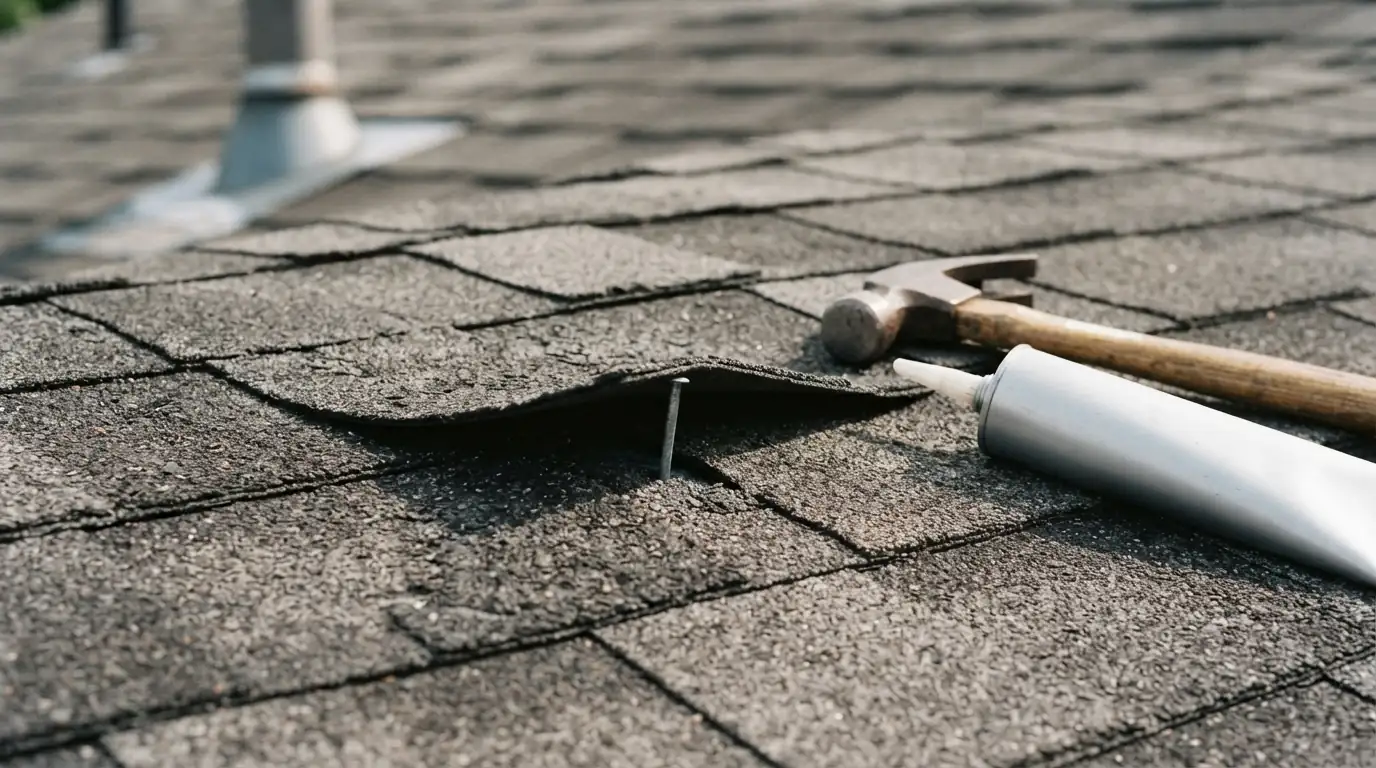
Nail pops happen as decking swells and shrinks through hot summers and cold snaps, pushing nails up until they lift the shingle above. Left alone, the raised shingle cracks and the nail hole leaks. We reset or replace popped nails, seal the heads and press the shingle back into its adhesive. Sealant around flashing, counter flashing and exposed fasteners dries out in the sun, so we cut out cracked beads and reapply roofing sealant rather than smearing new material over old.
Pipe Boot and Vent Check
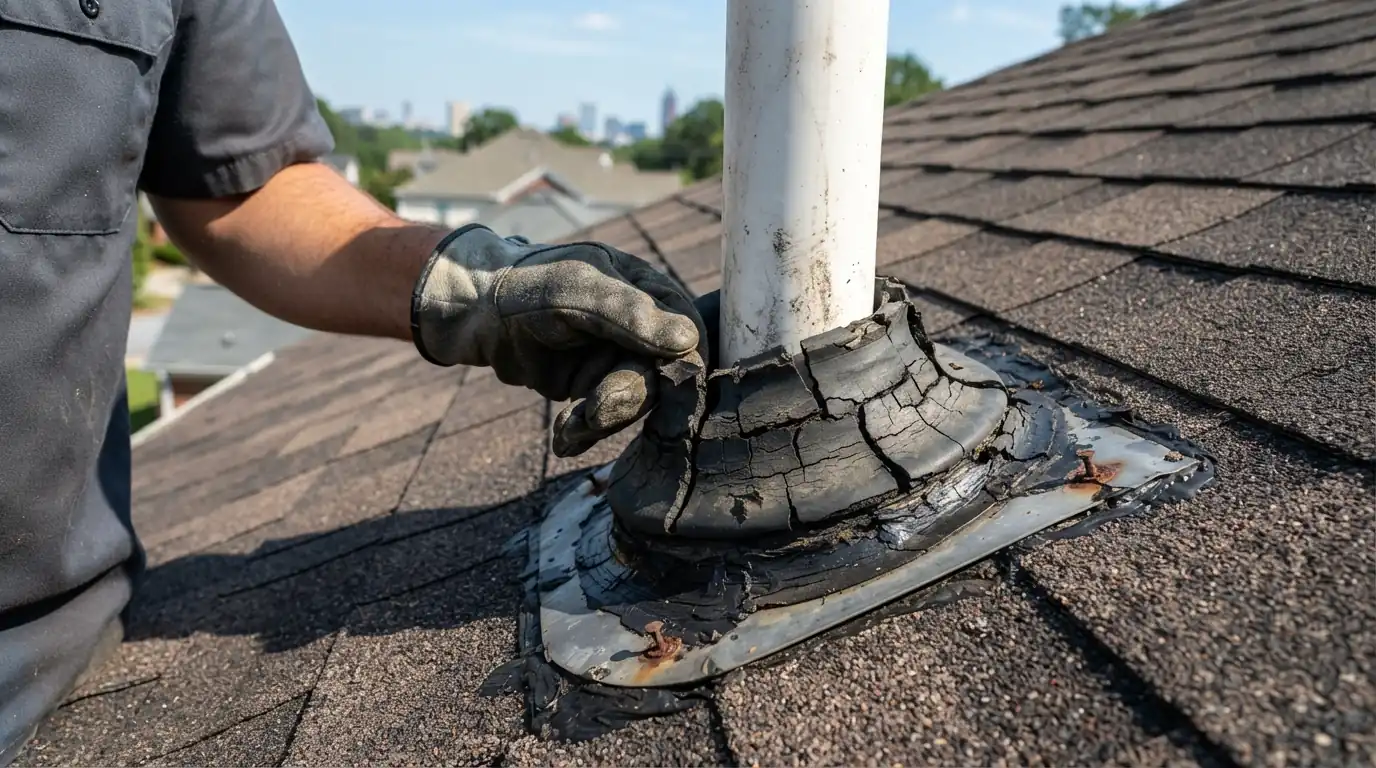
Rubber pipe boots are the most common leak on otherwise healthy roofs, because the collar dries and splits in the sun long before the shingles wear out. On a maintenance visit we check every boot, box vent, ridge vent section and exhaust cap for cracks, loose fasteners and gaps. A boot that is starting to crack is replaced before it leaks, with a full new boot rather than a collar slipped over the old one. The details are on our pipe boot repair page.
Valley and Debris Clearing
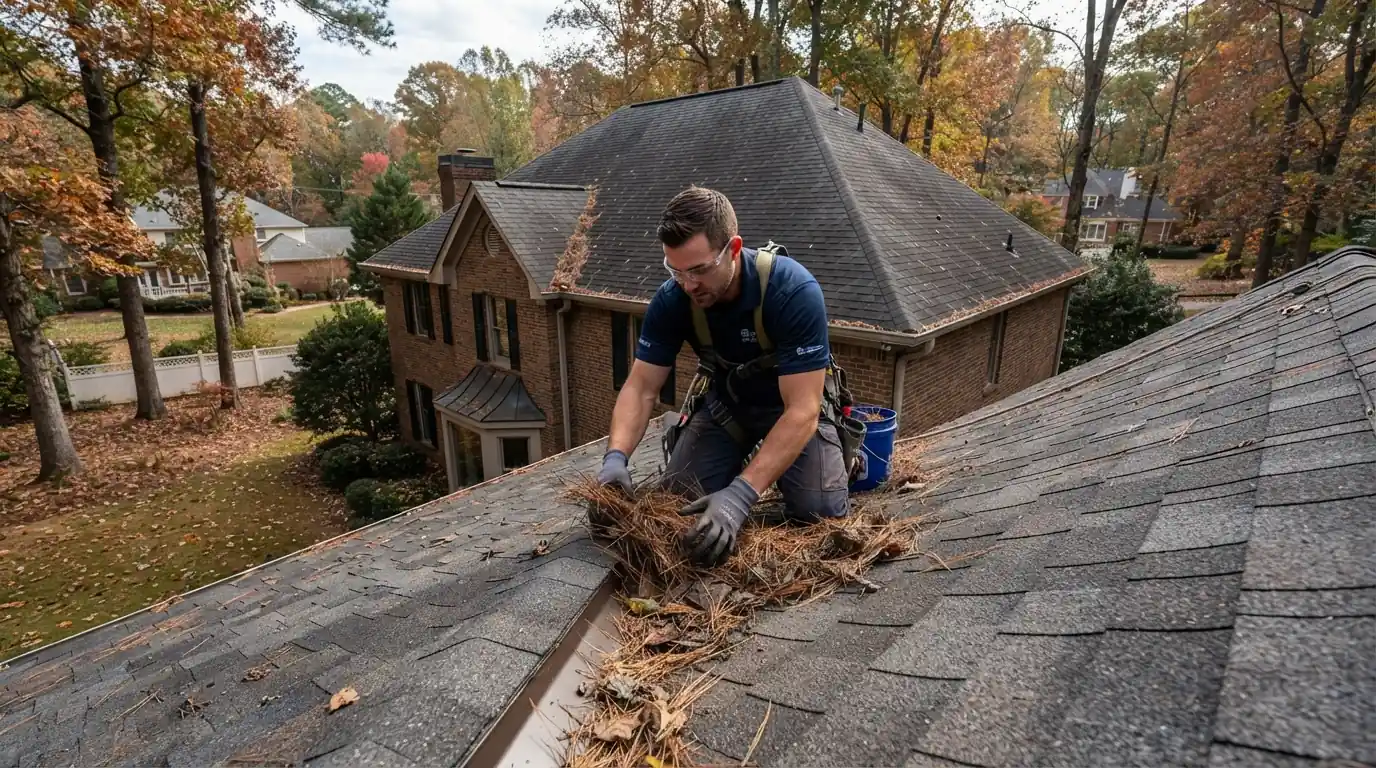
Valleys collect everything the roof sheds. Pine needles and sweetgum balls pile up where two slopes meet, hold water after every storm and let it wick under the shingle edges. We clear valleys, the high side of chimneys and roof-to-wall joints by hand, blow off loose debris without pressure washing the granules, and flush the gutters and downspouts so water has somewhere to go. Branches touching the roof get noted, since limbs rubbing in wind wear through shingles and give squirrels a path up.
Step by step
What Happens on a Maintenance Visit
- 1
Book a visit
Spring before storms or late fall after leaf drop.
- 2
Ground check
Gutters, fascia and visible slopes first.
- 3
Roof walk
Every slope, valley and flashing detail.
- 4
Quick fixes
Nail pops, sealant and debris handled on the spot.
- 5
Attic look
Stains, damp or daylight from inside.
- 6
Photos and notes
What we fixed and what needs attention.
- 7
Gutter flush
Downspouts running clear before we leave.
What drives the price
What a Maintenance Visit Costs Depends On
Maintenance is priced by the roof and by what the visit turns up.
Roof size and pitch
More slopes and steeper pitch take longer to walk.
Stories
Two-story roofs need more setup.
Debris load
Heavily treed lots mean more valley and gutter work.
Quick fixes
Nail pops and sealant are part of the visit.
Boots replaced
Cracked pipe boots add parts and labor.
Frequency
Twice-yearly visits tend to find less each time.
DIY or call a roofer
What You Can Do From the Ground and What We Do
Some of this is safe from the ground. Most of it is not.
| Doing it yourself | Having us do it | |
|---|---|---|
| Gutter cleaning | Single-story, from a ladder, with care | Any height, plus downspouts flushed |
| Valley debris | Blower from the roof edge, risky | Cleared by hand from the roof |
| Nail pops and sealant | Hard to spot from the ground | Found on a slope-by-slope walk |
| Pipe boots | Binoculars can show a split collar | Replaced before it leaks |
Questions we hear
Roof Maintenance Questions
Once a year at minimum, twice on heavily treed lots: before spring storms and after the fall leaf drop.
Yes. Pipe boots, sealant and nail pops fail on young roofs too, and they are cheapest to fix early.
No. Pressure strips granules. Algae streaks get a low-pressure soft wash instead.
Small fixes happen on the spot. Anything larger is photographed and quoted separately for you to decide.
Photos of a well-kept roof make it easier to show that later damage came from a storm, not neglect.
Yes, where it is accessible. Stains and damp decking show up there before they reach a ceiling.
Yes. Gutters and downspouts are flushed on every visit so the roof can drain.
Atlanta, GA service office
1421 Peachtree St NE FL. 3, Atlanta, GA 30361
Talk to a roofer today
Catch the small stuff before it leaks
Call to book a checkup before storm season or after the leaves come down. You get photos of every slope and a list of what we fixed.