Roofing guide
What Those Black Streaks on Your Atlanta Roof Are
It looks like dirt or mildew. It is neither, and pressure washing it is the one thing that makes it worse.
Talk to a roofer
A person answers any hour and can put a crew on the schedule while you are on the line.
Answered 24/7(470) 291-8924By Karl Sutton, Residential Roofing Writer · Updated September 2026
The black streaks on Atlanta roofs are an airborne algae that feeds on the limestone filler in many asphalt shingles and thrives in warm, humid shade. It is mostly cosmetic at first but holds moisture against the roof. The fix is a low-pressure soft wash, never a pressure washer, plus zinc or copper strips to slow regrowth.
The cause
What the Streaks Actually Are
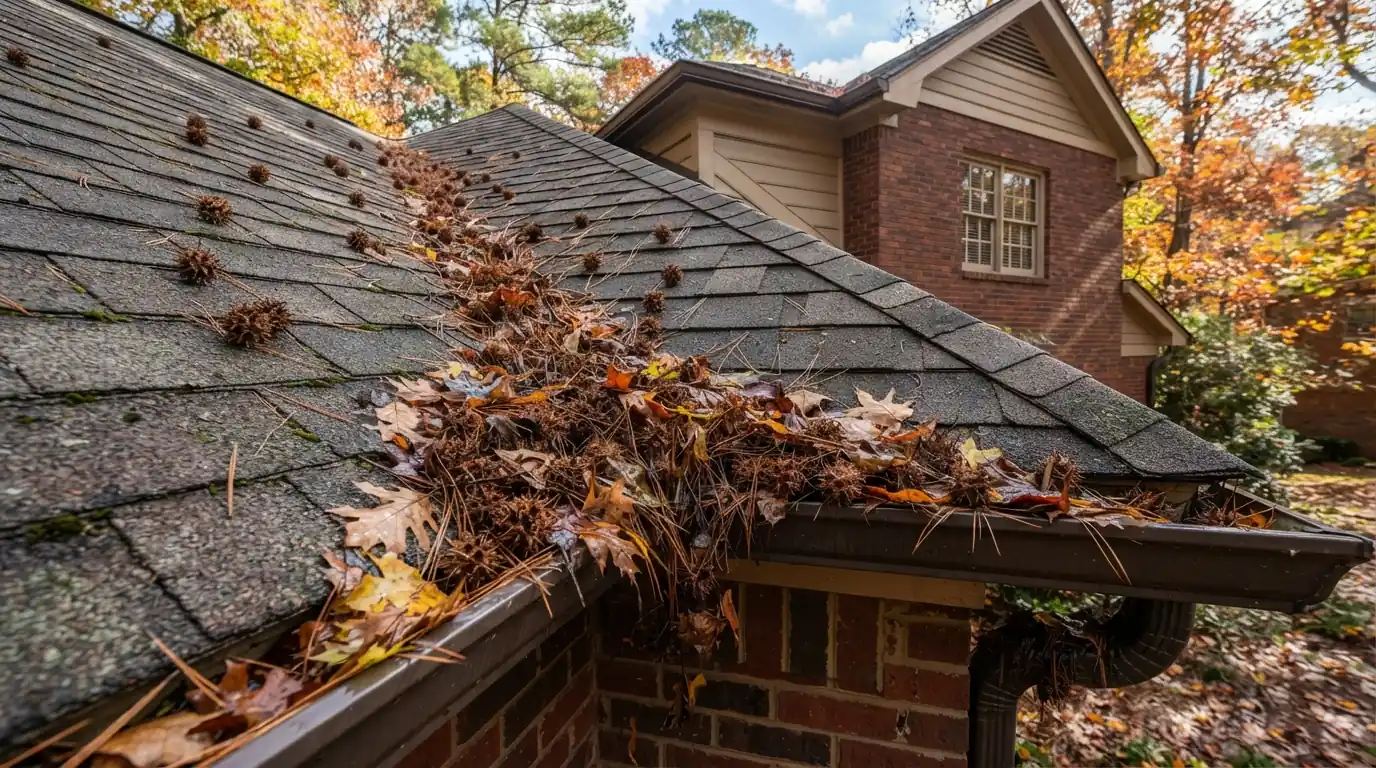
The dark streaks running down a roof are colonies of an airborne algae. Spores land on the roof, feed on the limestone filler used in many asphalt shingles, and spread downhill with every rain, which is why they form long vertical stripes.
The color comes from a dark protective coating the algae builds to shield itself from the sun. That is why it looks like soot rather than green growth.
Local conditions
Why Atlanta Roofs Grow So Much of It
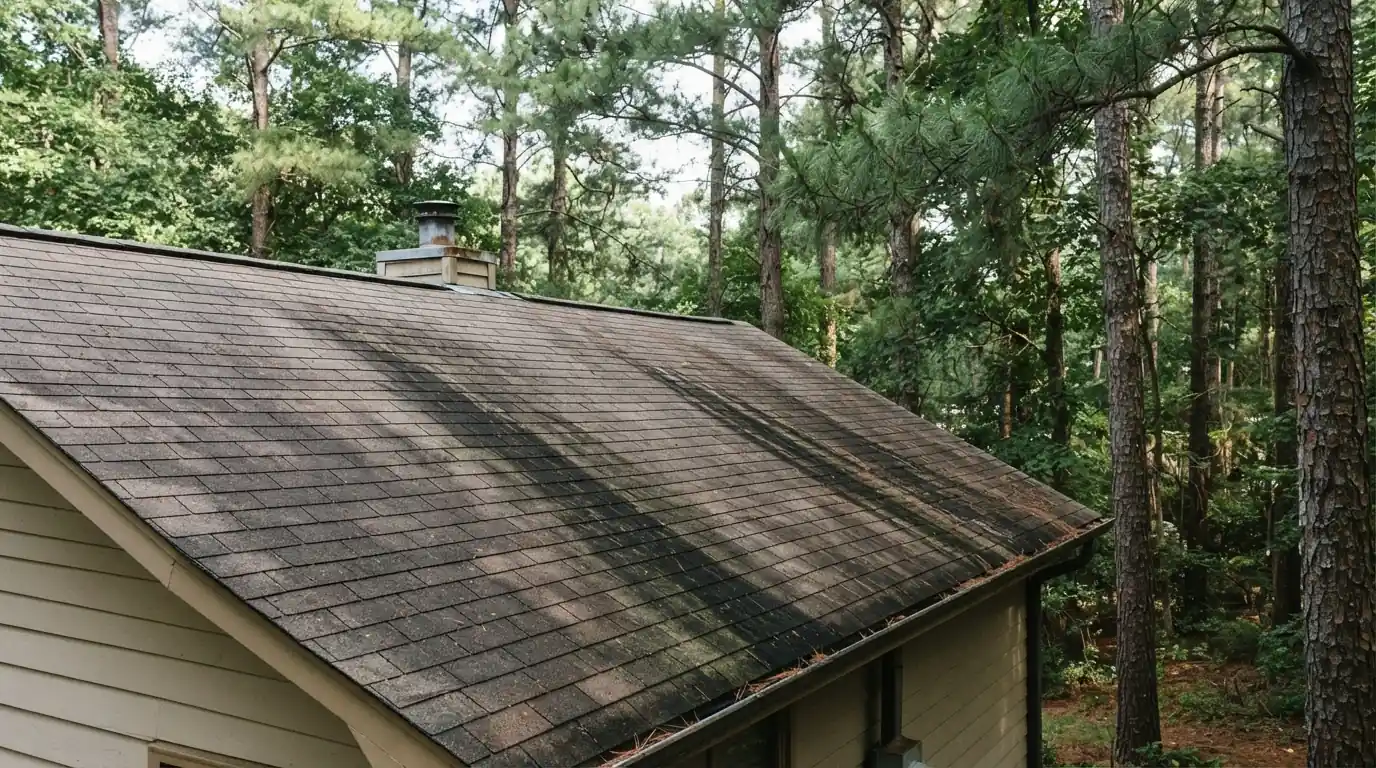
Algae needs moisture and shade, and Atlanta supplies both. About 61 percent of the city's single-family land sits under tree canopy, so a large share of roofs spend much of the day in shade and stay damp long after rain.
North-facing slopes and slopes under big pines and oaks streak first. Sunny south slopes on the same house often stay clean for years.
Damage
Is It Hurting the Roof?
At first, mostly not. Algae streaks are largely cosmetic and do not eat through a shingle on their own.
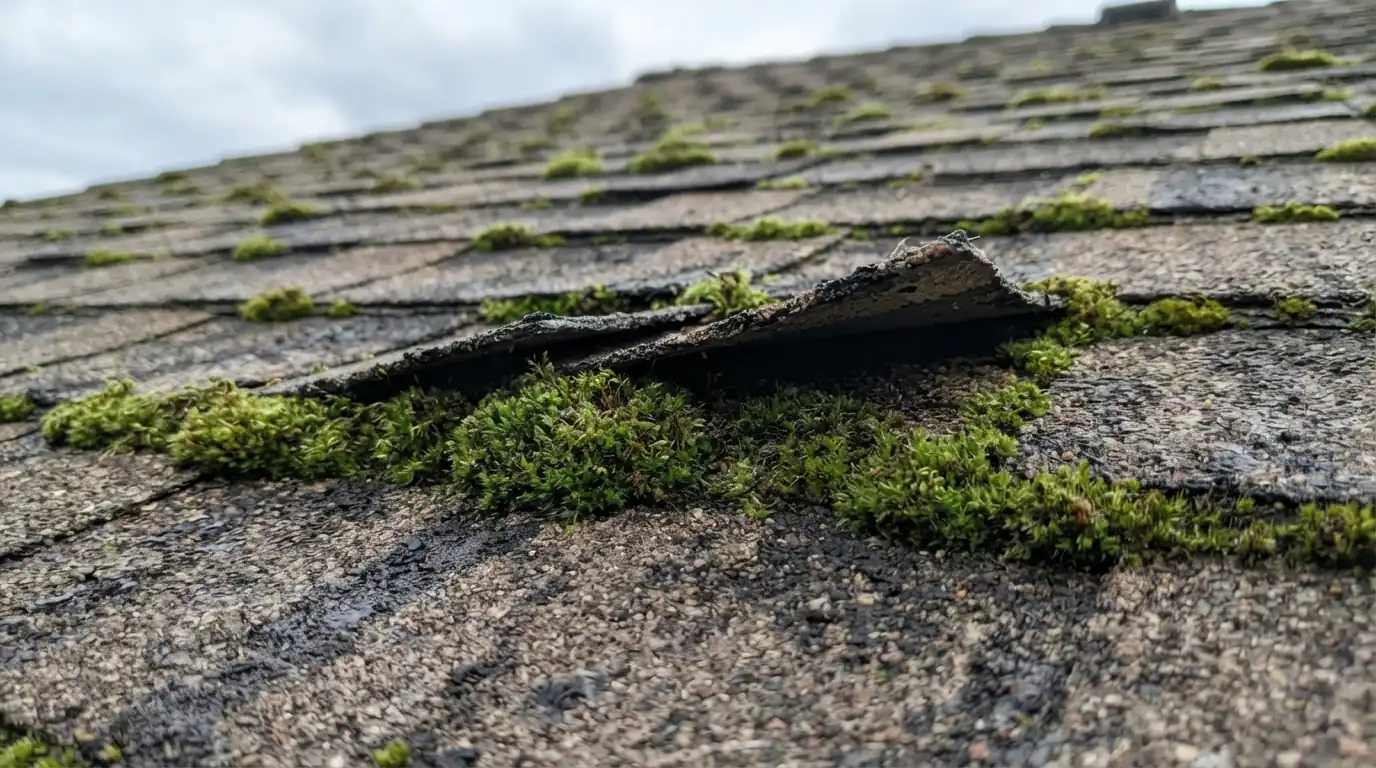
Over time they matter more. The growth holds moisture against the surface, darkens the roof so it absorbs more heat, and makes it easier for moss and lichen to take hold. Moss is the real problem: its thick cushions lift shingle edges and hold water underneath.
Streaks on the roof? Call and book a soft wash that leaves the granules where they belong.
Call nowThe fix
How to Remove It Without Damaging Shingles
The right method is a soft wash: a cleaning solution applied at garden-hose pressure, left to dwell long enough to kill the algae, then rinsed gently. Some streaks keep fading for weeks afterward as rain washes the dead growth away.
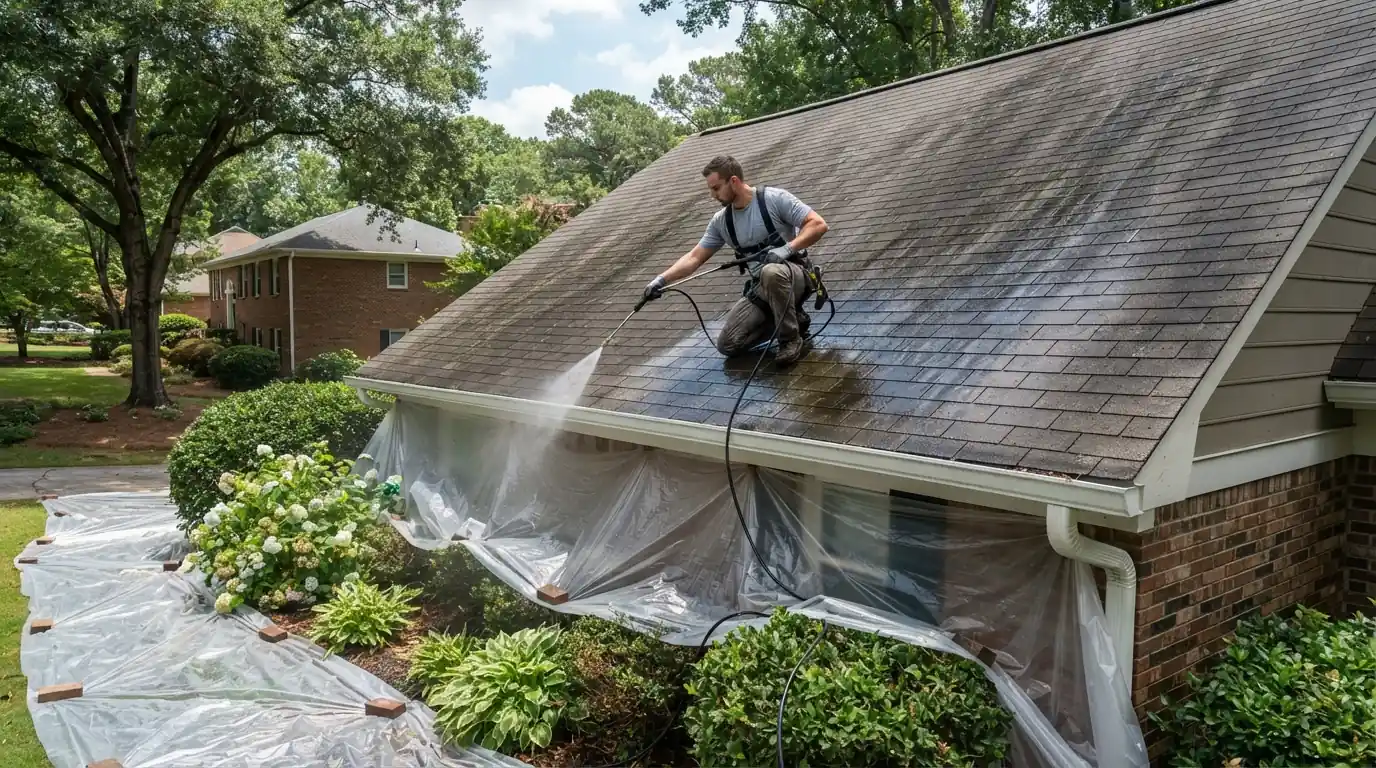
Plants below need protecting. They are wet down before and rinsed after, and anything sensitive is covered. Moss is loosened and removed by hand once the solution softens it.
Avoid this
Why Pressure Washing Is the Wrong Tool
A pressure washer strips the ceramic granules that protect asphalt from the sun. The roof looks clean for a while, then ages faster because the asphalt underneath is exposed.
It also drives water up under shingle edges and can tear brittle tabs. A roof that has been pressure washed often shows it for the rest of its life.
Prevention
Keeping It From Coming Back
Zinc or copper strips installed along the ridge release metal with every rain that slows regrowth on the slope below. Trimming branches to let more sun onto shaded slopes helps too.
At replacement time, many shingle lines now use algae-resistant granules, which is worth asking about on a shaded Atlanta lot. Our roof cleaning page covers the soft wash in detail.
FAQ
Short Answers to Common Questions
No. They are an airborne algae that feeds on limestone filler in many shingles.
Streaks are mostly cosmetic at first. Over time they hold moisture and invite moss, which does real damage.
Please do not. It strips the granules that protect the shingles.
It depends on shade and moisture. Zinc or copper ridge strips slow regrowth.
That slope gets more shade and stays damp longer.
They slow growth noticeably and are worth considering on a shaded lot at replacement.
Plants are wet down, covered and rinsed before and after to protect them.
Atlanta, GA service office
1421 Peachtree St NE FL. 3, Atlanta, GA 30361
Talk to a roofer today
Clean the roof without shortening its life
Call to book a soft wash. We check the shingles first, protect the plants and leave the granules in place.