Roofing guide
Getting an Atlanta Roof and Gutters Ready for Fall and Winter
Storm season is over and the leaves are coming down. This is the cheapest time of year to fix what summer left behind.
Talk to a roofer
A person answers any hour and can put a crew on the schedule while you are on the line.
Answered 24/7(470) 291-8924By Karl Sutton, Residential Roofing Writer · Updated September 2026
Fall roof prep in Atlanta comes down to four jobs: clear pine needles and leaves from valleys and gutters, check pipe boots and flashing for cracks, look for storm damage left over from the March-to-August season, and trim branches touching the roof. Done after the leaves drop, it keeps winter rain moving off the roof instead of into it.
Timing
Why Fall Is the Right Time
Most of Atlanta's hail and wind arrives between March and August, so by fall the roof has absorbed a full season of storms. Late-season patterns still bring damaging gusts across north Georgia, but the calendar is quieter and roofers' schedules loosen.
Winter rain is steady rather than dramatic, and it finds whatever summer loosened. A lifted tab or a cracked boot that stayed dry through a hot August will leak in a wet January.
Debris
Clear the Valleys and Gutters
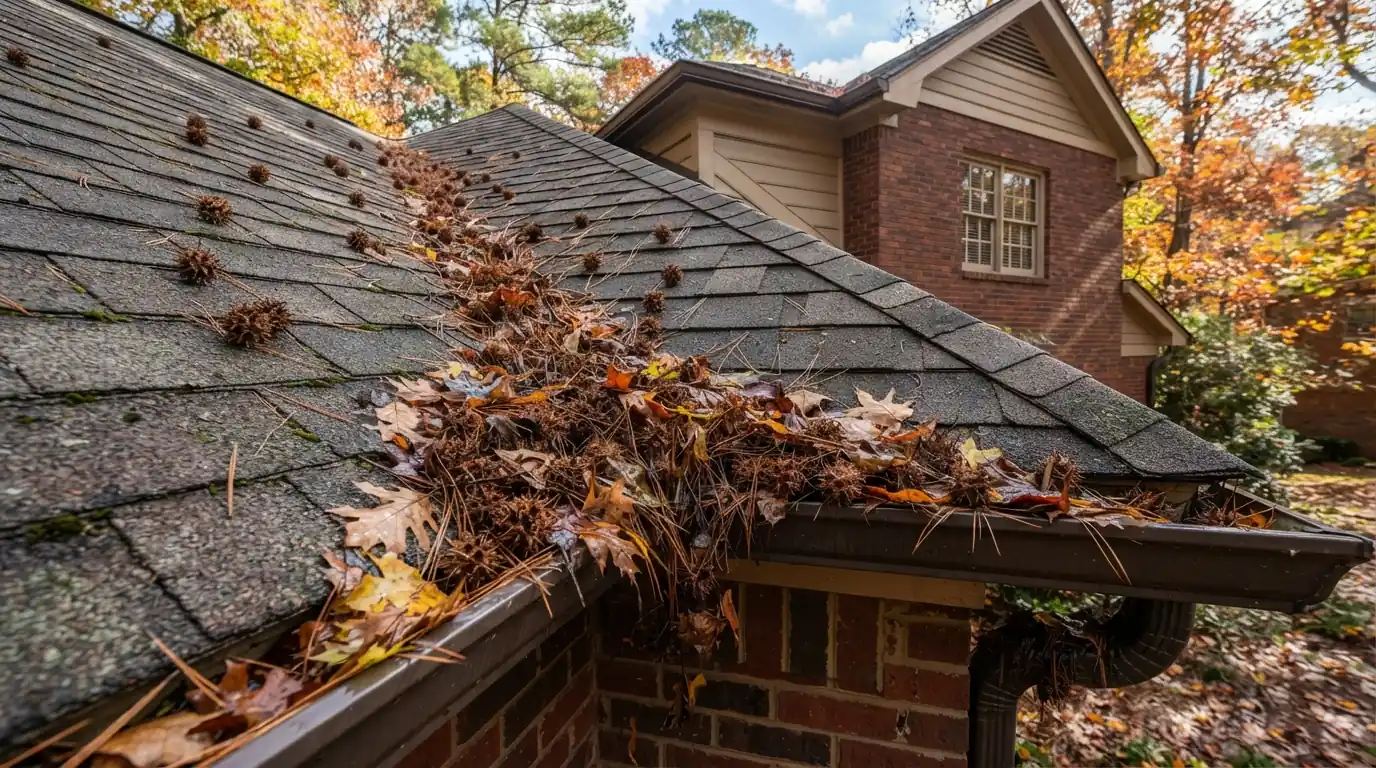
Loblolly pine is the most common tree in Atlanta, with sweetgum close behind, and between them they fill valleys and gutters with needles and spiny seed balls. Packed valleys hold water against the shingle edges; clogged gutters overflow behind the fascia.
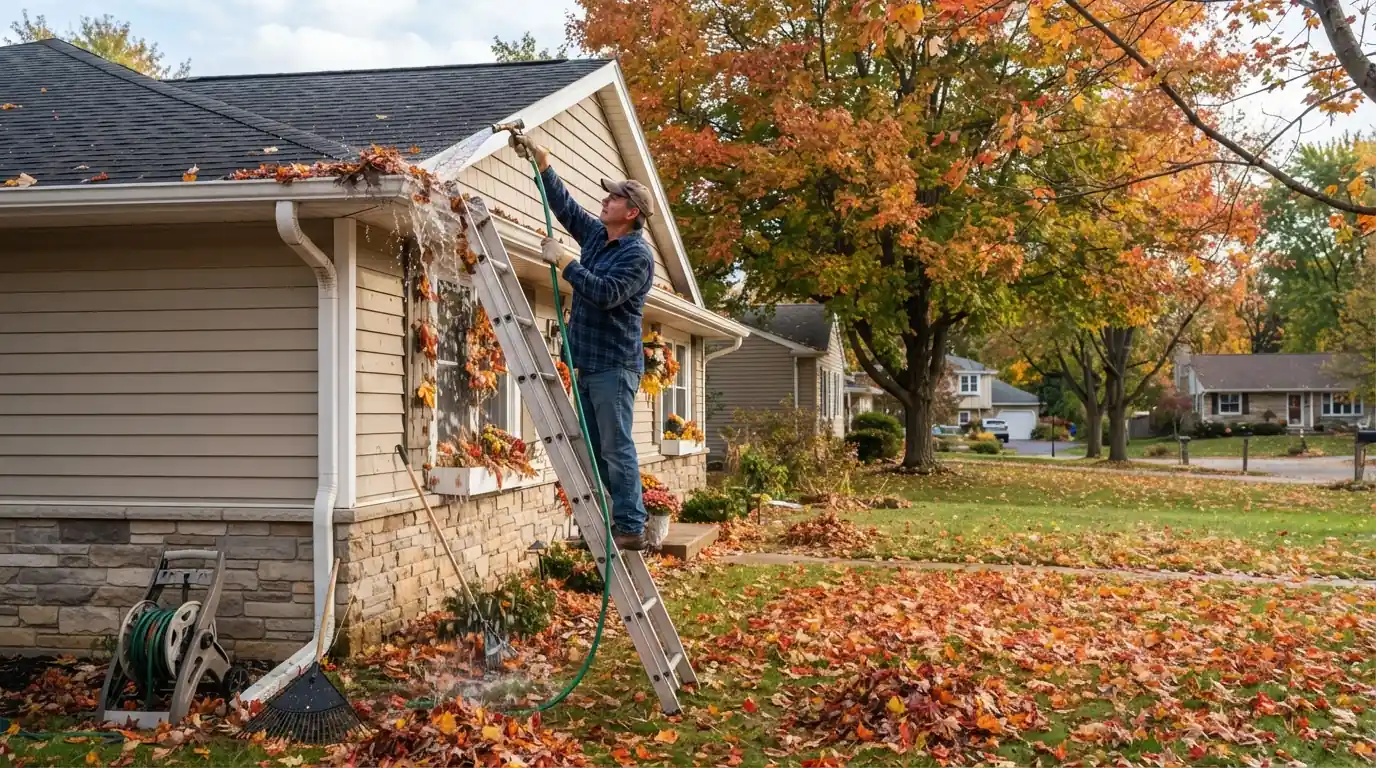
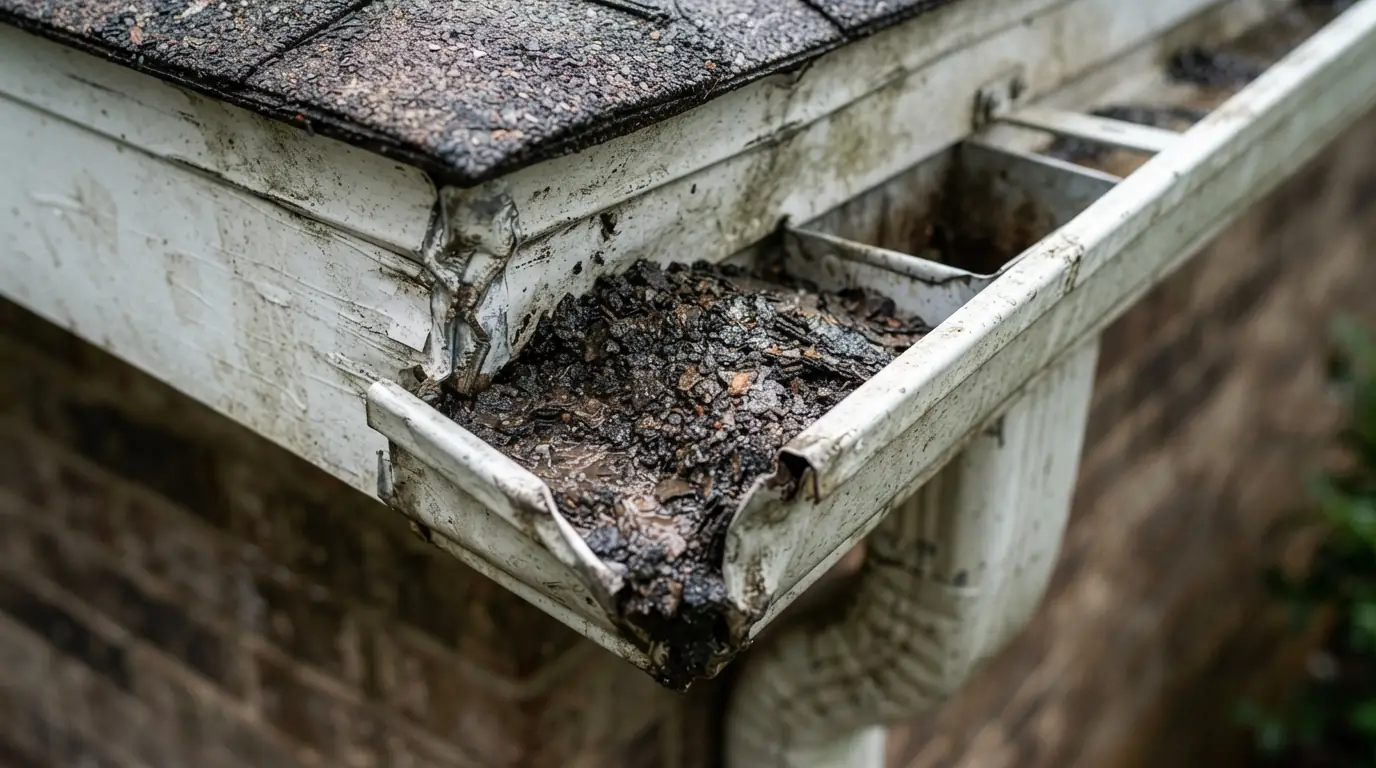
Clear valleys by hand, flush the gutters and run water through every downspout. If a downspout drains underground, make sure the water actually comes out the other end.
Storm damage
Check What Summer Storms Left Behind
Walk the yard and look up. Shingles or pieces of shingle in the grass, granules piled at the downspouts, and dented gutters or vents are all signs the roof took hits over the summer.
Lifted or creased tabs are harder to see from the ground but easy to spot on the roof. They let wind-driven rain track under the course, which is why a quick on-roof look in the fall pays for itself.
Small parts
Pipe Boots, Flashing and Sealant
Rubber pipe boots dry out and crack in the sun long before the shingles wear out, and summer heat speeds that up. Every boot should be checked for splits at the collar.
Flashing at chimneys and walls, and the sealant along it, also dries and pulls away in heat. Cracked sealant is cut out and replaced, and any flashing that has lifted is reset before winter.
Want the roof checked before winter? Call and book a fall maintenance visit.
Call nowTrees
Trim Branches Away From the Roof
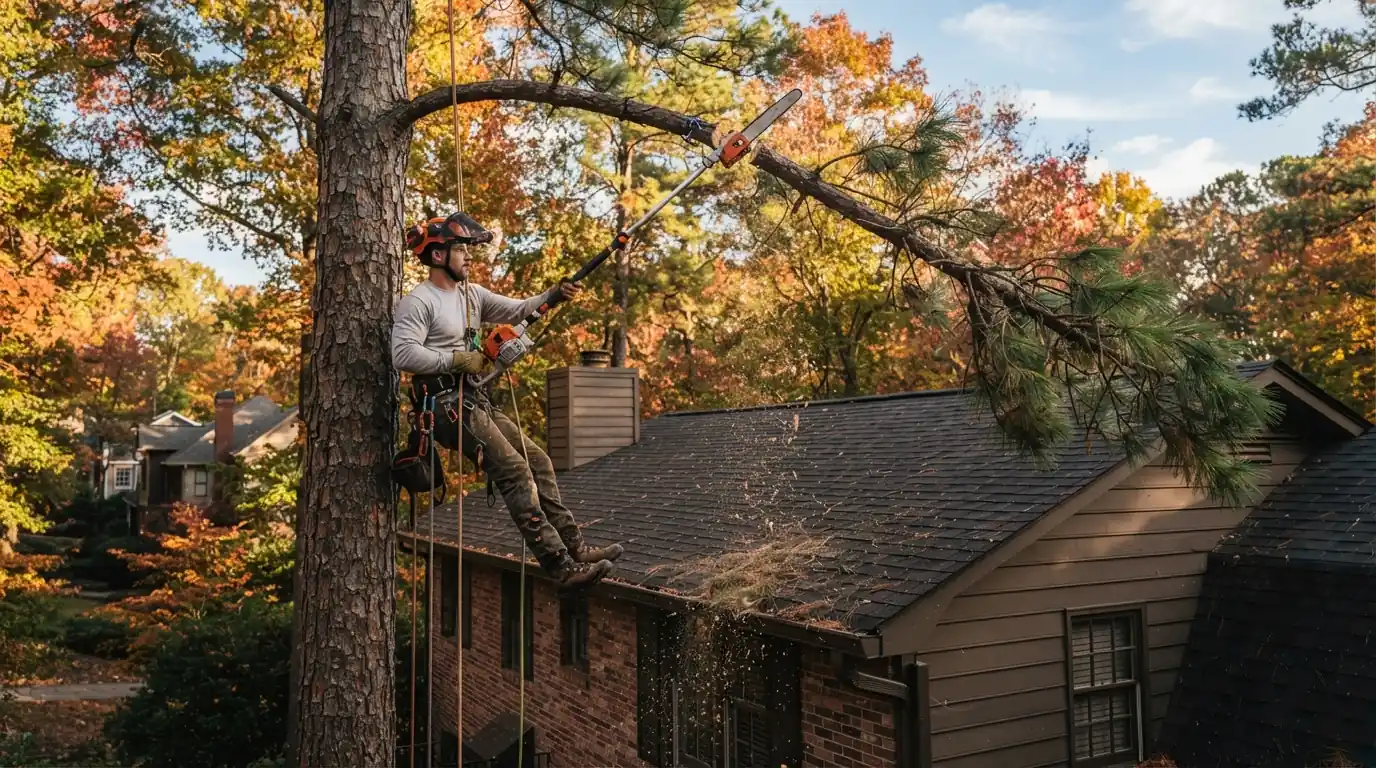
Branches that touch the roof scrape shingles every time the wind moves them and give squirrels an easy path to the fascia. Tree fall is also one of the main secondary causes of roof damage across the metro.
Keep limbs trimmed well back from the roof, and have an arborist look at any large tree leaning toward the house before winter storms test it.
From below
Look Inside the Attic
On a sunny afternoon, go up with a flashlight. Look for daylight through the deck, dark stains on the sheathing, damp insulation, and rust on nail tips.
Check that soffit vents are not buried under insulation. An attic that cannot breathe in winter collects condensation on the underside of the deck, and that moisture does its damage quietly until spring.
Safety
What You Can Do and What to Leave to a Roofer
Ground checks, attic checks and single-story gutters with a stable ladder are reasonable homeowner jobs. Walking the roof, clearing valleys on a steep pitch, and anything on a second story are not.
A fall maintenance visit covers the roof side in one trip: valleys, boots, flashing, nail pops and a photo record of every slope.
FAQ
What Homeowners Ask Next
After most of the leaves have dropped, usually late fall, so valleys and gutters stay clear into winter.
Under pines and sweetgums, usually twice: once in fall and again in late winter or spring.
Partly. You can spot missing shingles, dented metal and granules. Lifted tabs and boots need a closer look.
Leaks at cracked boots and lifted tabs, overflowing gutters and condensation in poorly vented attics.
Small limbs near the ground, maybe. Anything over the roof or near power lines is a job for an arborist.
They cut it down a lot, but mesh still needs an occasional brush-off.
Most homes are done in one visit, including gutters and a photo report.
Related
Services and Guides on This Topic
Atlanta, GA service office
1421 Peachtree St NE FL. 3, Atlanta, GA 30361
Talk to a roofer today
Get the roof ready before winter rain
Call to book a fall checkup. We clear what needs clearing, fix the small stuff and photograph every slope.